Should you improve the product or launch a variant?
By Ontevo · Published October 10, 2026
Improve the core product when a change serves its intended buyers without undermining why they choose it. Consider a variant when a distinct group has an incompatible need and can support the added cost. Use an optional add-on when the benefit can be separated cleanly. Judge the decision by the contribution of the whole range.
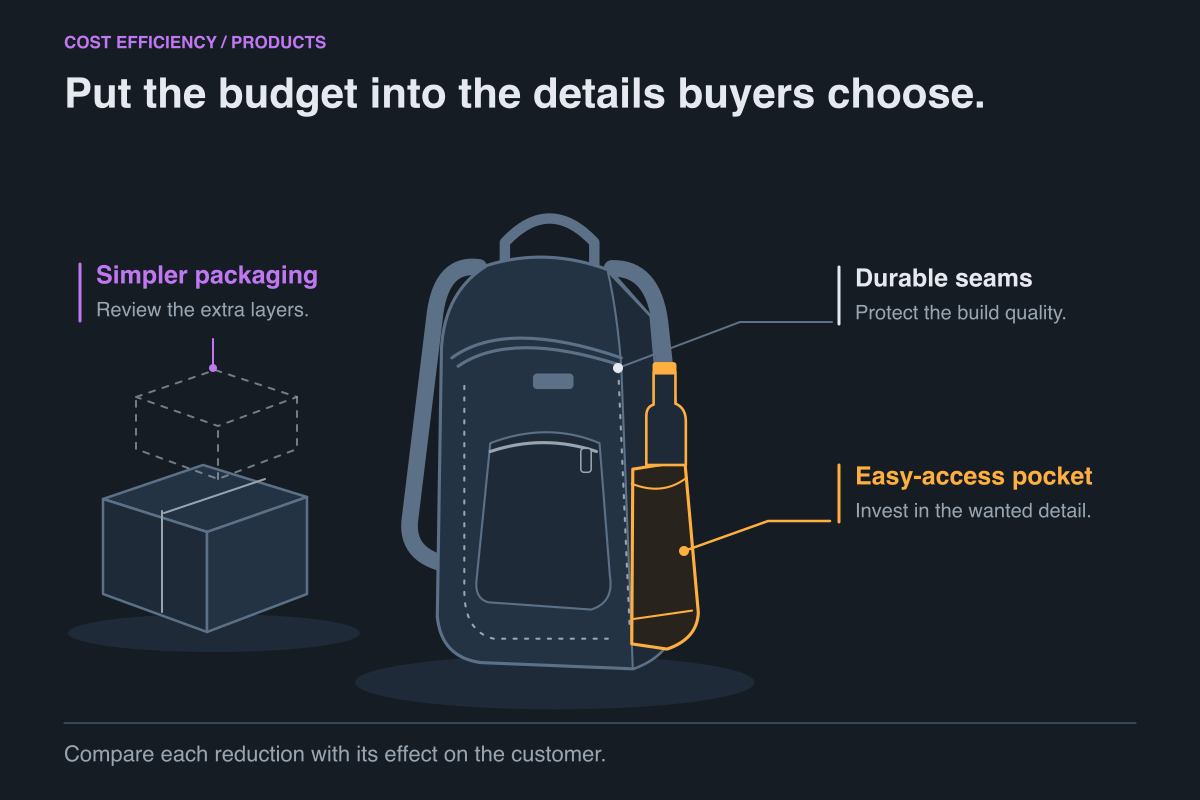
A hypothetical backpack brand hears requests for both more structure and less weight. The team adds padding, compartments and a removable frame. The pack now offers more, but commuters still find it bulky and equipment-heavy travelers still want better organization.
Feature accumulation can leave the original conflict unresolved. The important question is whether the business needs a better common product, a genuinely different version, or a smaller accessory that lets buyers adapt it.
Our guide to testing your offer before increasing ad spend explains how to investigate a buying obstacle. Once the evidence reveals conflicting needs, use it to decide what belongs in the range.
Are customers asking for incompatible things?
Separate differences in use from differences in wording. Requests for more pockets and easier access may describe the same need. Requests for a rigid protective compartment and a pack that folds flat may require a genuine tradeoff.
For the hypothetical backpack, reconstruct the buying situations. A commuter carries a laptop and wants the bag to fit under a seat. A photographer carries fragile equipment and needs organized protection. A weekend traveler wants flexible space. These are hypotheses to investigate, not established segments.
Ask what each buyer carries, what failed, which alternative they chose and what they accepted in exchange. Use comparable competing offers to ground that tradeoff. The same person's needs may change between trips, favoring an accessory over another bag.
Check whether the conflict survives design work. A better layout might improve access without adding bulk. Investigate before committing to differences the business may not need.
The output is a specific conflict: whose benefit improves, whose experience worsens, and which design constraint creates the tradeoff.
Give every proposal a route into the range
Choose a provisional route before naming a new product. A Core-or-Variant Decision Sheet connects a buyer situation to the conflict a change resolves, the simplest feasible product structure, and the effect on the whole range. It records the evidence still missing, the added operating work, and the conditions for retaining or retiring the proposal.
The routes below use the hypothetical backpack. They are design options to compare, not recommendations established by customer research.
| Route | When it deserves consideration | Backpack example | What would challenge the decision? |
|---|---|---|---|
| Improve the core | The change helps intended buyers without a material sacrifice elsewhere | Reposition the opening for easier access | The redesign weakens protection or adds unacceptable cost |
| Launch a variant | A distinct use needs a materially different configuration | A structured equipment-carrying version | Most buyers would choose the existing pack anyway |
| Offer an add-on | The benefit can be separated without making the core incomplete | A compatible removable organizer | Installation, fit or support makes it cumbersome |
| Hold the proposal | The need, design or economics remains unresolved | A new configuration supported only by enthusiastic comments | Stronger behavioral evidence or a feasible design resolves the uncertainty |
An add-on still needs a business case. Compatibility, separate fulfillment and missing-part questions can consume its apparent simplicity. Essential performance belongs in the base product; requiring another purchase to make the advertised use work changes the offer buyers thought they were getting.
Keep the difference buyers need, then share what you can
A separate customer choice doesn't require a separate design for every component. Keep the parts that create the benefit distinct and examine whether the rest can be shared.
McKinsey’s consumer-first portfolio approach pairs customer-valued distinctions with standardization of underlying designs. That provides a useful direction for the architecture review.
The backpack versions might share zippers and some fabric while using different internal structures. They might also share nothing useful if their loads and dimensions differ too much. Commonality only helps when the shared part meets each version’s requirements and the economics support it.
Ask operations to identify the actual work created by the difference. A cosmetic change made late in packing can behave very differently from a separate pattern that changes cutting, assembly and quality checks. Count the activities and dependencies introduced, rather than treating every new stock code as equally expensive.
Can the new version improve the whole range’s economics?
Compare the expected contribution of the proposed range with the range you would otherwise sell over the same period. Sales of the new variant alone leave out what happens to existing products.
Some buyers may arrive from competitors or from choosing nothing. Others may switch from your current pack. That switching is cannibalization. It can be acceptable when the new choice improves contribution or retains buyers who would otherwise leave; it becomes expensive when the business pays for complexity while merely moving sales between its own products.
Menezes and Pinto’s portfolio research models market expansion alongside cannibalization and substitution. Its numerical experiments offer no universal rate to plug into your forecast.
For the decision sheet, estimate range contribution after variable costs, returns and acquisition costs. Subtract the extra shared operating costs and launch costs that aren't already included. Keep inventory cash requirements visible separately; cash tied up in unsold packs matters even when the projected contribution looks attractive.
Use explicit scenarios for switching and genuinely additional demand. If a modest change in either assumption reverses the decision, keep the commitment small until better evidence arrives. Don't count the same customer as both an additional variant sale and a retained core sale.
Find the work that the product margin hides
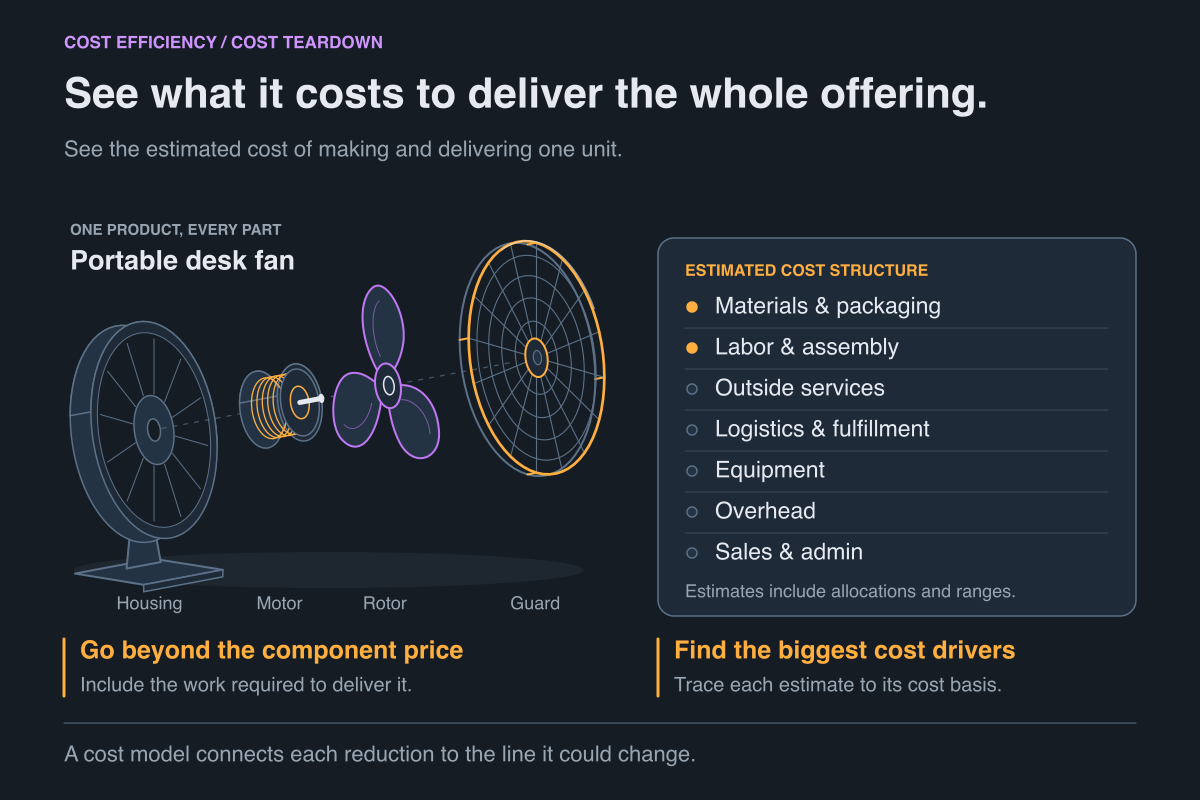
Trace the proposed variant through the business before approving it. Follow its path through purchasing, production planning, fulfillment and after-sale support. Record what becomes harder and which costs would actually disappear if the variant didn't exist.
McKinsey’s analysis of customization costs points out that complexity can sit across the value chain and be obscured in aggregate accounts. A healthy component margin can coexist with extra work elsewhere.
For the backpack, check whether a new fabric has its own minimum order, whether separate demand forecasts leave slow-moving stock, and whether buyers can reliably identify the compatible organizer. Use quotes and operating records where available. Label assumptions as estimates.
Fisher and Ittner’s automotive study associated day-to-day variability in option content with several operating burdens at a GM assembly plant. That setting doesn't establish the cost of variety for a backpack brand. It does reinforce the value of examining how variation reaches the work.
Avoid loading every historical overhead expense onto the new variant. The decision needs incremental costs, genuine capacity constraints and costs that can be avoided. An arbitrary allocation can reject a useful addition as easily as an incomplete cost model can approve a poor one.
Test the range buyers will actually see
Show the proposed choices together. A new version may look compelling alone yet add little when the existing pack sits beside it. Buyers also need to understand which version suits their use without studying a wall of specifications.
Observe whether people can select an appropriate option and explain the tradeoff. Track confusion, comparisons and abandonments as well as preference. Survey responses can narrow the design; they don't establish actual sales or the eventual mix.
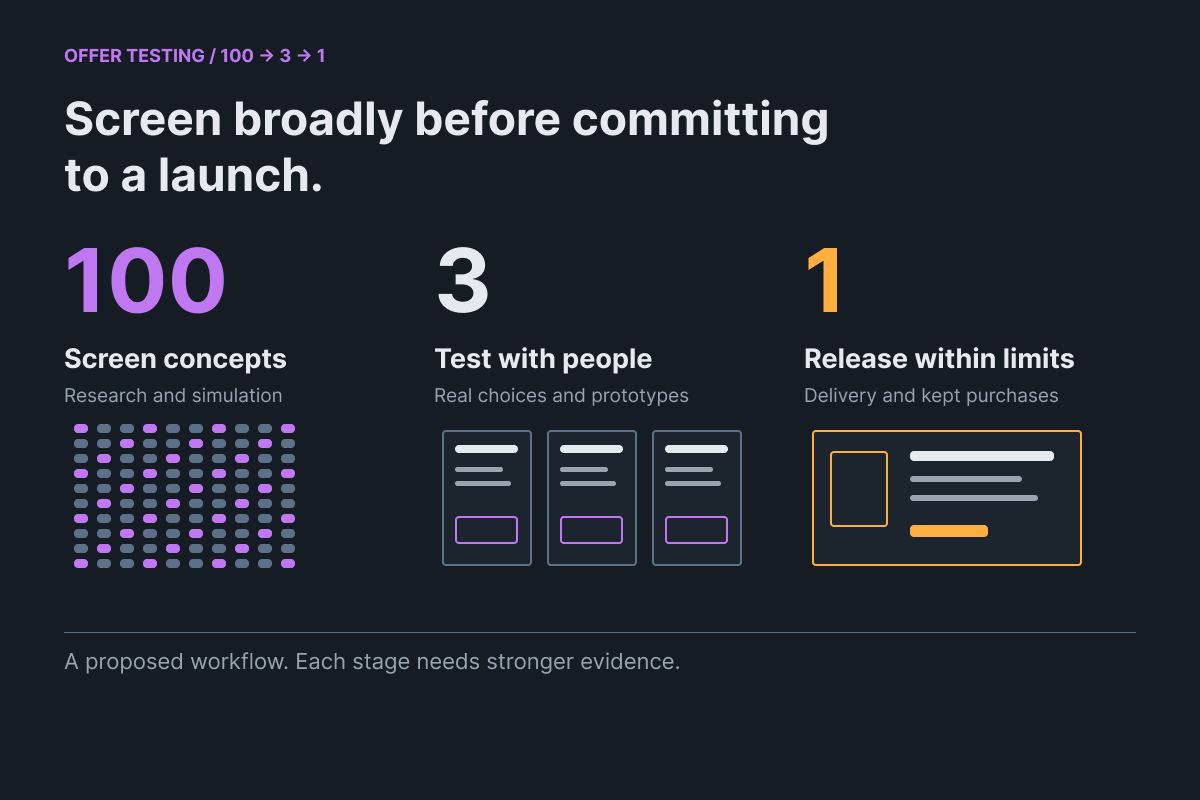
Where feasible, use a limited production run with honest availability and clear terms. Evaluate contribution across the exposed range, kept orders and operational strain. Compare against a credible baseline; a launch-week spike with extra promotion doesn't isolate the effect of the variant.
If the distinction needs clearer explanation, fix that before authorizing another configuration. Buyers caught in a specification comparison need to understand how the differences fit their use.
Decide how a variant will leave the range
Write the review and retirement conditions before launch. Review the original reason for the variant when customer needs, competing products or supplier conditions change, and before a major replenishment commitment.
Weak volume should prompt investigation. A low-volume version may earn attractive contribution, serve an otherwise lost buyer group or support an important channel. A busy version may mainly divert sales from a better business.
When retirement is justified, plan remaining inventory, customer communication, compatible replacements and continued support. Check whether withdrawing the version frees meaningful capacity or simply leaves shared costs behind. A discontinued product can keep creating work after its listing disappears.
Questions before adding another version
How much evidence is enough to justify a variant?
Enough to support the size and reversibility of the commitment. A small pilot can proceed with unresolved demand; dedicated tooling and substantial inventory need a stronger case. Write down the uncertainty the next commitment is buying down.
Is some cannibalization always a failure?
No. A switch can be commercially useful. Compare what the customer would otherwise have bought, the contribution change and the added operating costs. The new version’s sales total cannot answer that question alone.
What if the business cannot support another variant?
Consider an add-on, a shared redesign or a deliberate decision to leave that use unserved. Being explicit about the buyer the core product serves can be more useful than maintaining a configuration the business cannot deliver well.
Ontevo Research. Where this post carries figures, they come from Ontevo's own scan corpus or are modeled from scan patterns across the category. No figure is measured from a named customer.