
Find the next growth opportunity in each portfolio company.
Compare each company’s offering and customer experience with direct competitors. Use evidence-linked recommendations and estimated revenue impact to focus management teams and inform the value-creation plan.
15-minute call to scope a free 100-Day Diagnostic for one company.
Or preview one company free
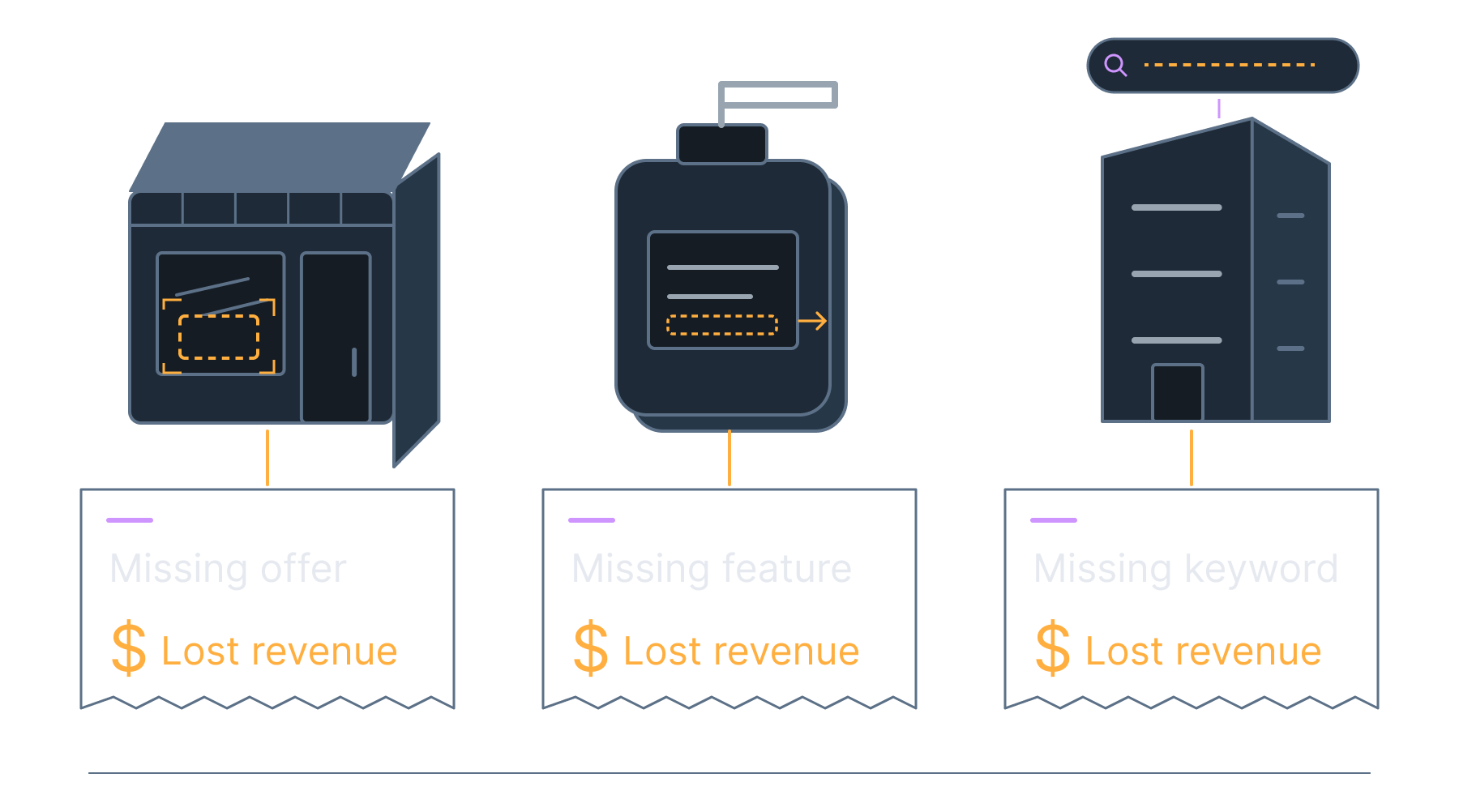
Give management a specific action to evaluate.
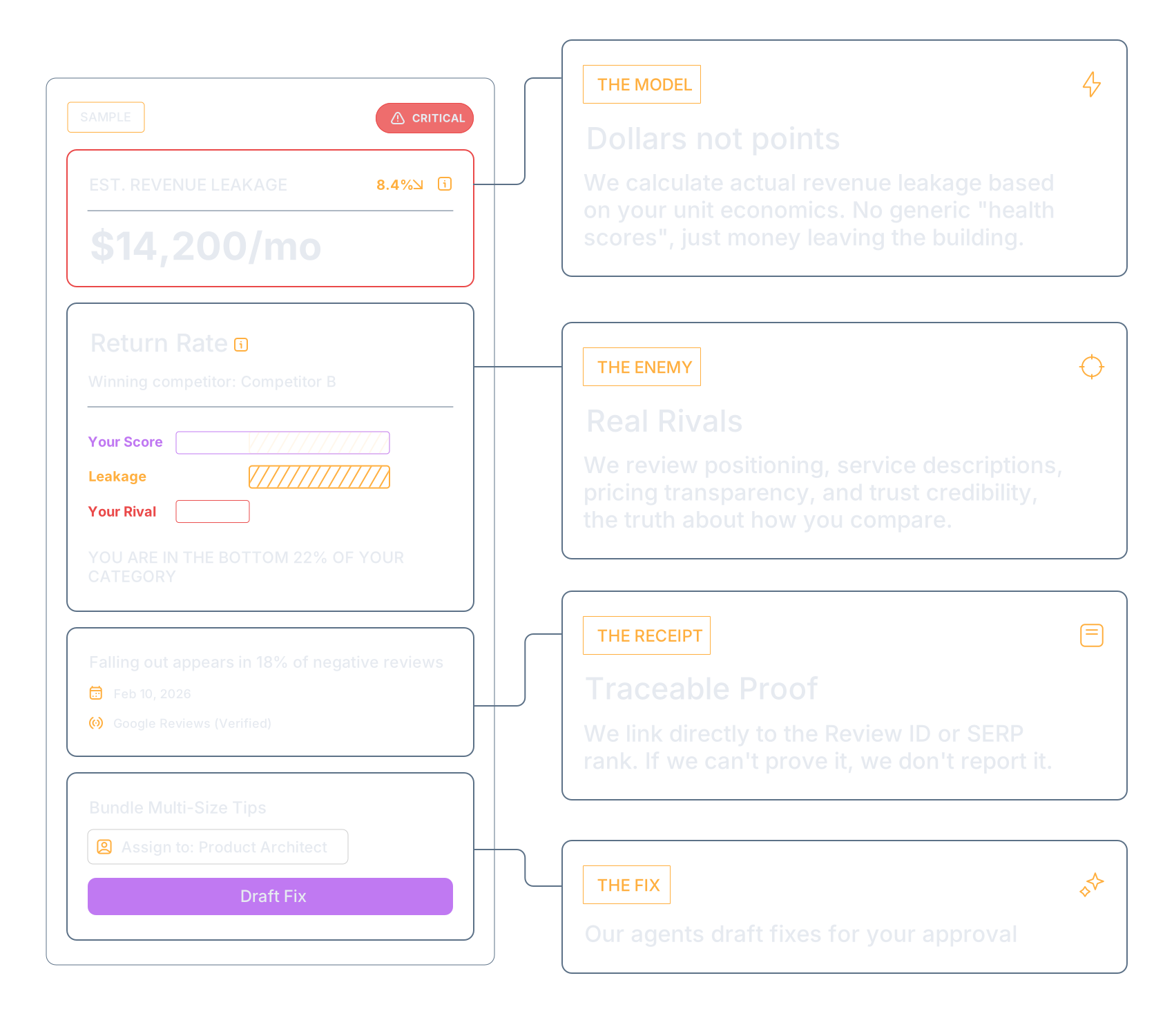
Use a 50-point diagnostic to compare the business with direct competitors. Truth Cards connect the proposed change to supporting evidence and estimated revenue impact.
Commercial diligence
Assess a target or portfolio company across its offering, reputation, search, website and AI visibility. Compare it with direct competitors and use the outside-in evidence alongside your financial and operational diligence.
Value-creation planning
Bottoms-up, dollar-priced estimates of the revenue upside and cost savings hiding in each portco, so the growth thesis in your IC memo comes with receipts, not guesses.
100-day execution
A prioritized fix list per portco, with AI agents drafting the repeatable work, so the value-creation plan survives past the first board meeting.
Portfolio rollup
One standardized Truth Card format across every portco, so you compare all 25 companies apples-to-apples in a single quarterly view your LPs will believe.
Make the growth plan specific enough to assign.
Identify the offer, reputation or visibility gaps that deserve management attention, then examine the evidence and financial assumptions behind each recommendation.
Diligence goes stale at close
Pricing headroom, churn risk, and product gaps live in a PowerPoint deck that's irrelevant 6 months after close. The 100-day plan becomes a 365-day improvisation.
Every portco is a black box
Each company runs its own marketing stack. No shared diagnostic, no apples-to-apples comparison, so the underperformer hides in the rollup until it misses budget three quarters running.
$300K a portco. Then they leave.
A one-time assessment needs a way to track what changes through the hold. Keep findings, proposed actions and follow-up reviews connected.
“Deploy one standardized engine across every portco. Show me, every quarter, where revenue is leaking and what we're doing about it: across all 25 companies, in one view, with dollar figures my LPs will believe.”
Sound familiar? This is the brief we built to.
Bring a consistent market view to the portfolio review.
Compare findings in the same Truth Card format while keeping each company’s competitive context visible.
1
2
3
The rollup view is the differentiator.
Use a consistent diagnostic across portfolio companies so each operating review starts with comparable findings. Healthcare businesses can be assessed through public information without patient records.
Use the findings to sharpen the next management discussion.
Bring evidence-linked recommendations into the value-creation plan and decide where the team needs deeper research, specialist support or execution.
Standardized output
One Truth Card format across every portco: the sponsor compares apples-to-apples in a single quarterly view.
CFO-peer voice
Dollar-denominated findings in your literal vocabulary. Consultants speak in slides; Ontevo speaks in receipts.
Pre-exit narrative
A deployed diagnostic and a quarterly Truth Card stack are part of the story you hand a buyer at exit.
Portable method
One standardized Truth Card format means the diagnostic you run this quarter reads the same next quarter, and at the next fund.
Revisit market gaps during the hold.
Use repeat diagnostics to review how the offer and its competitors have changed, alongside the company’s operating and financial results.
Fund-level agreements start from the $264K/yr list ($25K platform plus $5K per portco per month).
Every pilot returns a priced Truth Card stack on your portcos.
Agree the companies, scope, success criteria and written pilot terms before work begins. The free 100-Day Diagnostic is a separate read-only offer.
What operating partners ask first
Ontevo supports your advisers and operating teams with outside-in evidence and proposed actions. They still bring the internal data, judgment and responsibility for diligence and execution.
We multi-thread. The fund buys the engine, and each portco CEO gets direct value: Truth Cards solve their problems too. The diagnostic doesn't require portco cooperation to start; it runs on public signal.
The first read-only 100-Day Diagnostic for one portfolio company arrives in under 24 hours. Review the findings with the operator before deciding whether to commission a pilot or extend the scope. Use “Discuss a free 100-Day Diagnostic” to agree the scope. The Rapid Scan form above previews one business.
SOC 2 Type I and HIPAA readiness are in progress. Outside-in scanning for healthcare assets (no PHI, no logins), draft-only publishing on all external writes, and tenant isolation. The full posture, the documents we send and how to reach us are on our Security page.
Cohort benchmarks are built from public market records, never from another customer's data: you can't build spec-level benchmarks on each portco's 10 direct competitors from your own data alone.
See how a team could use the findings.
These illustrative scenarios show how the recommendations could inform a decision.
Bring findings from different portfolio companies into one operating review, with evidence and assumptions available for inspection.
Illustrative scenario: 23-portco services platform fund
We priced the leak per portco in dollars our LPs believe, at the budget line of one commercial-diligence engagement.
Illustrative scenario: mixed-sector mid-market GP
Compare an underperforming company with its direct competitors to decide where the operating team should investigate first.
Illustrative scenario: healthcare value-creation team, outside-in scanning
Company profiles are anonymized composites drawn from real scan patterns.
Give one company’s operating plan a clearer starting point.
Choose one portfolio company for a free 100-Day Diagnostic with findings and recommendations to review with its management team.
1. Enter one portfolio company’s website and your email.
2. Get three personalized insights from the Rapid Scan.
3. Review the preview and decide what to investigate next.