
Build your next offer around what customers want.
Turn a finding from your Full Diagnostic into a product or service concept with requirements, renderings and a cost model. Concept Studio (beta) also prepares launch materials for your team to review and refine.
In beta; included with Growth at $445/mo per entity. Growth carries monthly AI credits equivalent to a $50/mo AI plan, plus 50 simulations and concept generations a month. Find your next product in 30 days, or your second month is free.
Concept Studio is in beta and included with Growth. Review the plan before creating an account.
See what a market finding can become.
This product example brings together the concept, requirements, cost assumptions and draft launch materials. The figures illustrate a modeled case.
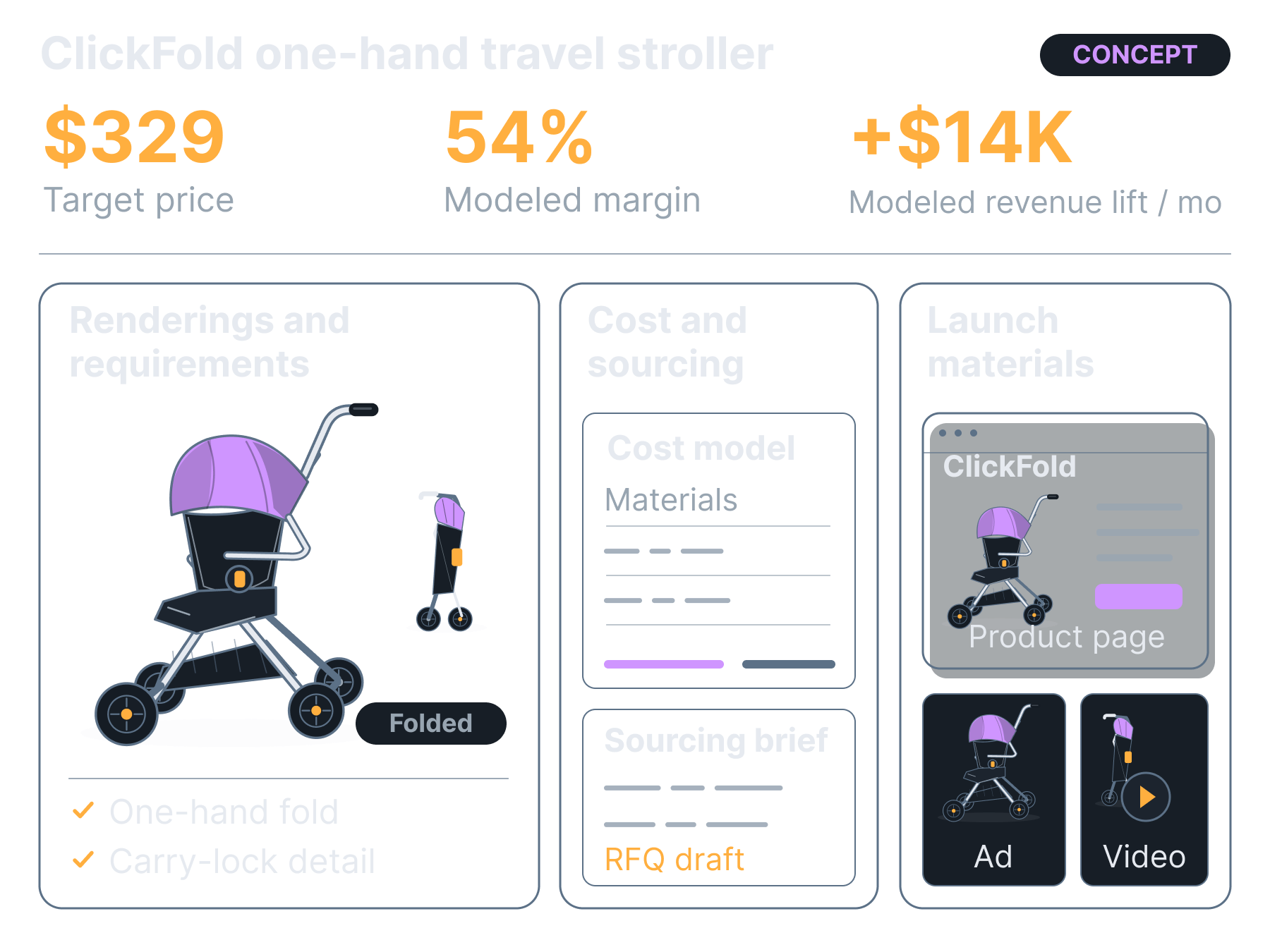
Review the concept with its design, costs and launch materials.
Examine the proposed offer and its supporting materials together before deciding what to refine.
The concept and the spec
Two directions, A and B, each with a name, a tagline, the positioning, and a golden spec sheet: components, materials, packaging, sizes, claims and certifications for a product; methodology, duration, provider requirements and capex for a service. Every line traces back to the evidence that asked for it.
The money
A Truth Card with the recommended price and why, the estimated cost per unit, the gross margin against the category, the monthly and annual revenue picture, and the named risks. Cost comes from a bill of materials estimated twice, once conservatively and once optimistically, then merged.
The pictures
Two hero renders, three thumbnails, a 360 degree orbit, and a downloadable 3D model for a product concept.
The launch assets
A full landing page, seven sections for a product and eight for a service, six to ten assembled ad units with headlines, body copy and hooks, a short video, a social post, and a seven-section requirements document you can download.
Start from a finding in your Full Diagnostic.
Use the customer and competitor evidence behind the finding to shape the concept brief.
How the diagnostic works1
2
3
Develop the next offer for your business or client.
Use Concept Studio (beta) for a consumer product, a local service or an offering your agency is developing for a client.
A product brand
If you sell a product, you are deciding what the next SKU is before you commit to tooling, a co-packer or five thousand units. Concept Studio gives you the spec, the cost and the price to take into that conversation.
A service business
If you sell a service, you are deciding what goes on the menu next, at what price, and whether the room and the staff you already have can deliver it.
Several businesses at once
If you run several businesses or several clients, you are doing that in each one, and the concept for each is grounded in that business's own scan, not a house template.
A nine-SKU skincare brand finds its next format.
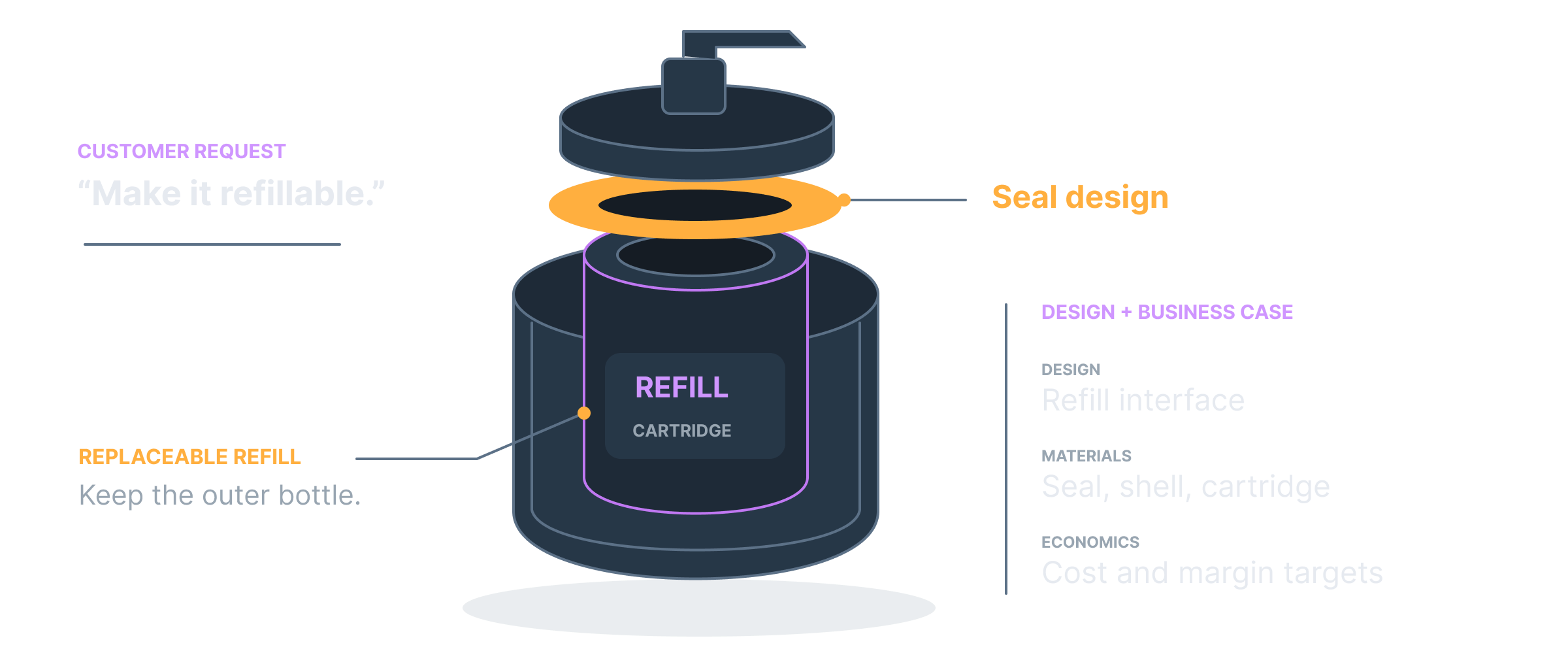
The brand runs its diagnostic and the demand read comes back with a refill format its category keeps asking for and nobody in its competitive set sells. Concept Studio returns the concept in two directions, the golden spec down to the container and the closure, a bill of materials costed twice, a recommended price set against the category's own price ladder and the point where buyers stop, the margin that price leaves, the risks named, and then the hero renders, the product page and the ad set. What goes to the co-packer is the spec sheet and the cost sheet. What goes to the panel next door is the whole thing.
Get the right development brief for a product or a service.
A product needs design requirements and material costs. A service needs a delivery plan and operating assumptions. Review the version that fits the offer you want to build.
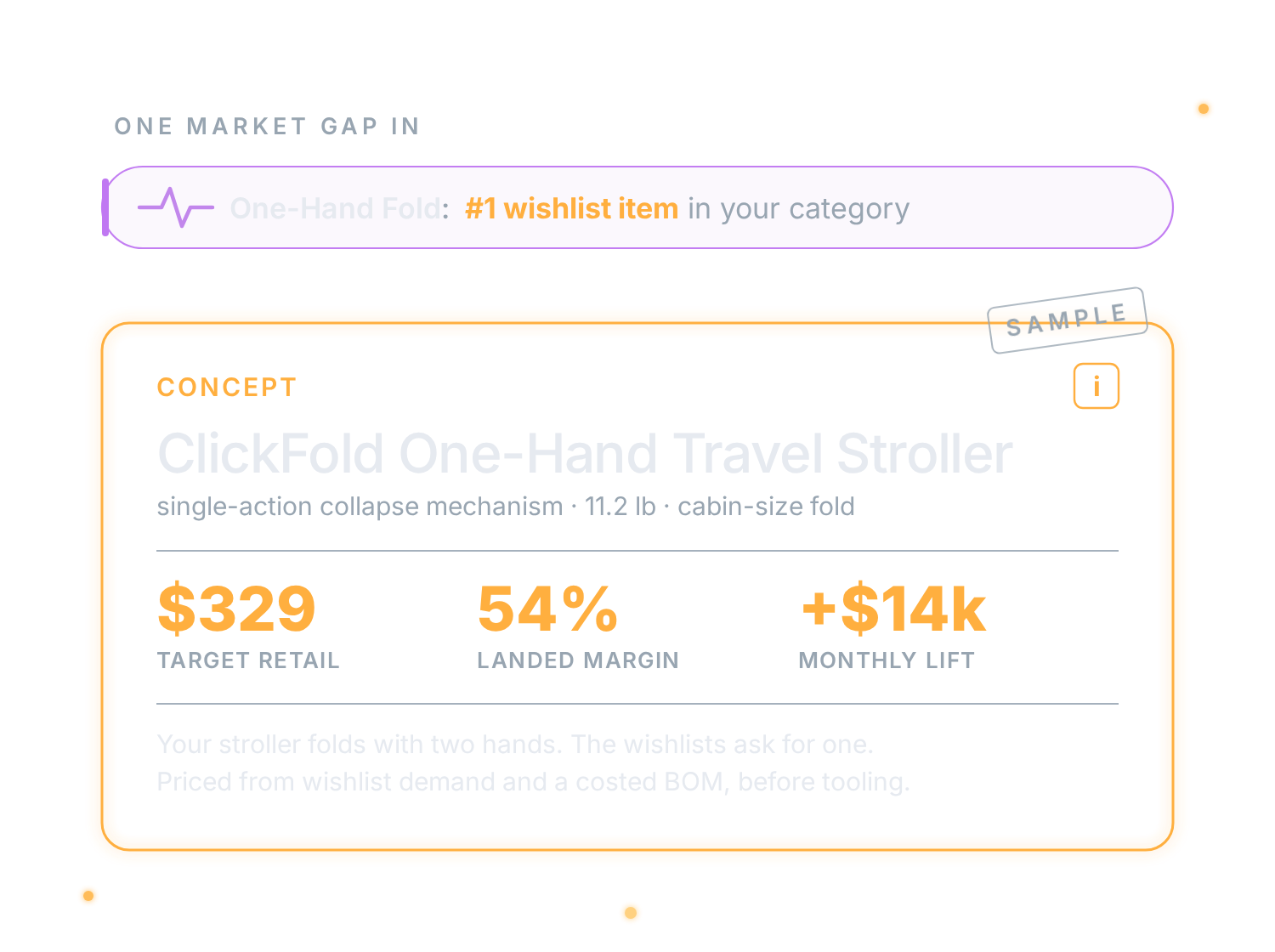
A product concept
Spec, packaging, a bill of materials, a 3D model, a seven-section product page.
A service concept
A proposed offer with delivery requirements, staffing and cost assumptions, plus draft service-page content.
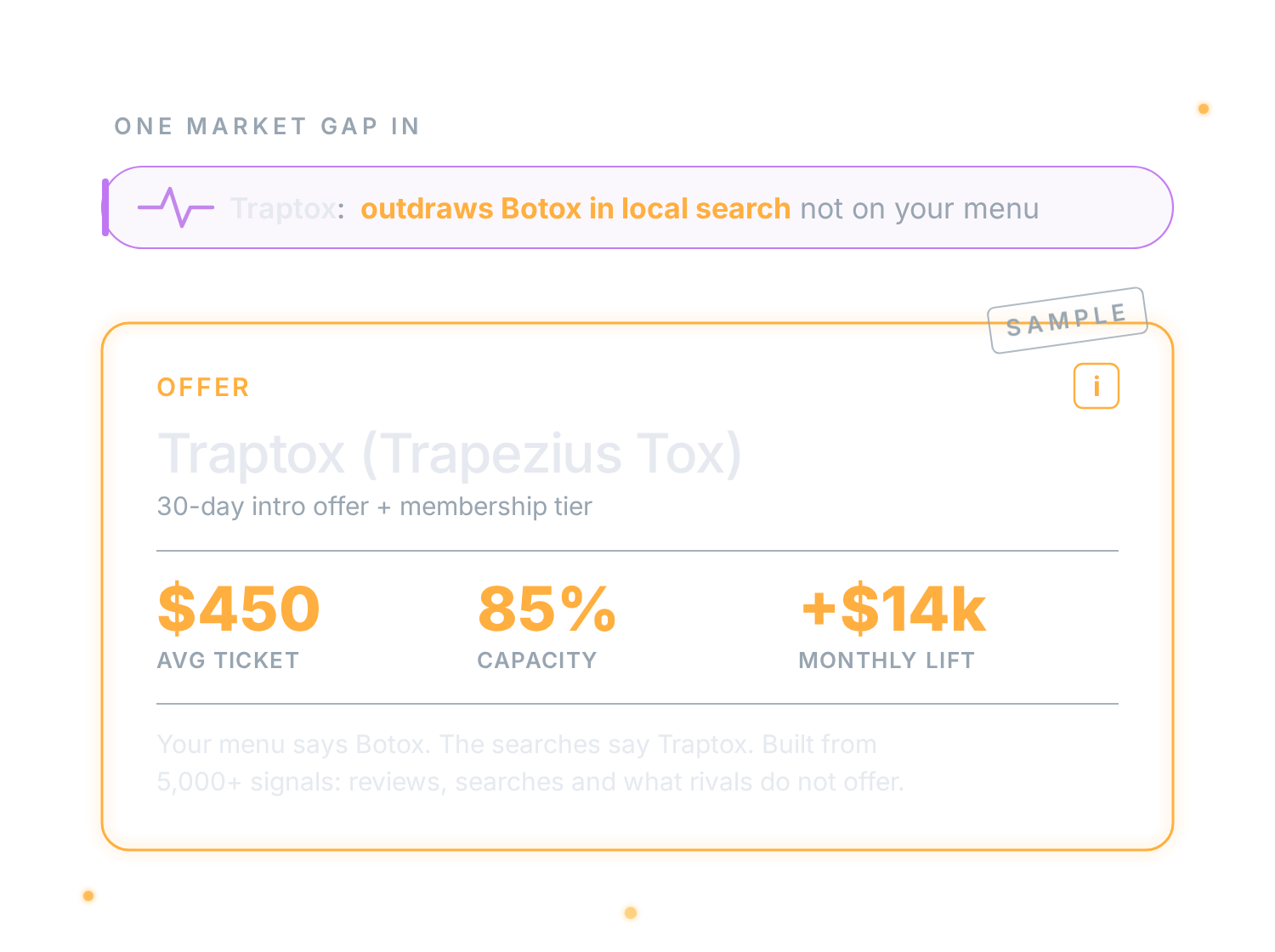
Both are samples. The figures are the engine's estimates on a sample business, not a customer's results.
Compare the concept before taking it further.
Send the concept to Simulation Engine (beta) for synthetic buyer feedback on Trust, Value and Friction. Use the objections and preferences to improve the brief before testing with real customers.
See how the panel worksKeep the concept connected to the market evidence.
Review the customer requests, competitor differences and cost assumptions that informed the proposal.
Operations
Obtain supplier quotes
Bill of materials, sourcing and break-even
What people ask before the first run.
Was this built for dentists, or does it read my product listings?
Both. Concept Studio runs on whatever your scan is grounded in. A product scan reads listings, specifications, reviews and the price ladder of your competitive set, and returns a product concept with a bill of materials and a product page. A service scan reads menus, treatment pages and local search language, and returns an offer with a capex read and a service page. The two output shapes are different on purpose.
What do I actually walk out with, a slide or something I can send a supplier?
A spec sheet, a cost sheet and a price, plus the pictures and the pages. The spec sheet is written at the level of components, materials, packaging and claims. The cost sheet is a bill of materials estimated twice and merged, with the sourcing notes and a request for quote you can send. You can download the requirements document and the copy pack, print them, or share a read-only link.
What does it cost, and is it in the $445/mo plan?
Yes. Concept Studio is in beta and included with Growth at $445/mo per entity. Growth carries monthly AI credits equivalent to a $50/mo AI plan, plus 50 simulations and concept generations a month. Essentials at $245/mo per entity does not carry it.
Are the dollar figures on the card real?
The concept's recommended price, margin and revenue estimates are modeled from the diagnostic and category context. Review the assumptions, confirm costs with suppliers and test demand with real buyers. The examples on this page illustrate the output.
Review the assumptions before committing to development.
The concept, costs and launch materials are drafts. Check technical feasibility, obtain supplier quotes and validate demand with real customers before investing in production or service delivery.
Develop the next offer from your market findings.
Start with your Full Diagnostic, then use Concept Studio (beta) to create and refine a proposal your team can evaluate.
Or start with the free Rapid Scan: your top 3 revenue leaks, on screen. Your website and your email are the whole input.