Parents Search Trust, Not Spec Sheets.
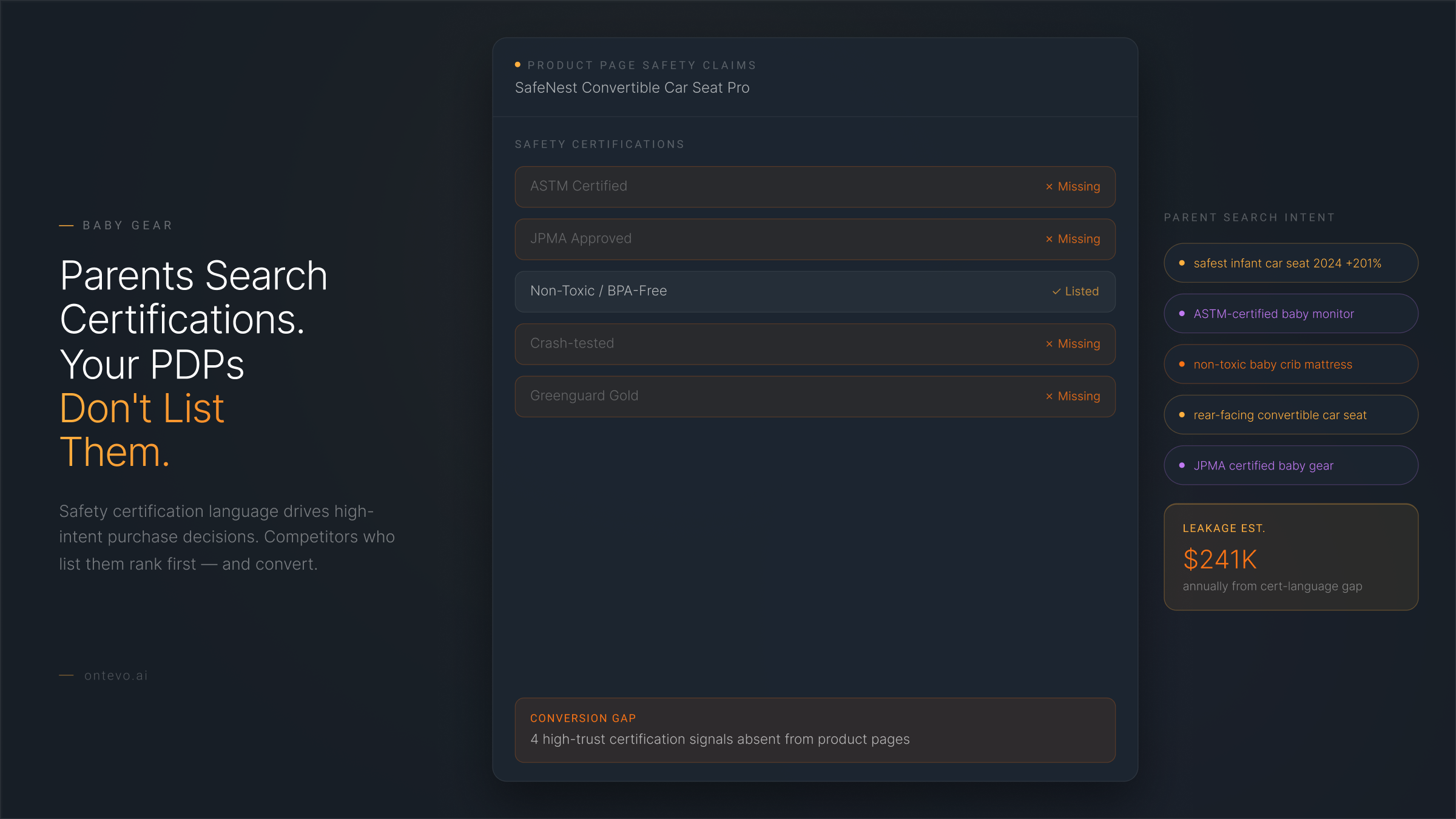
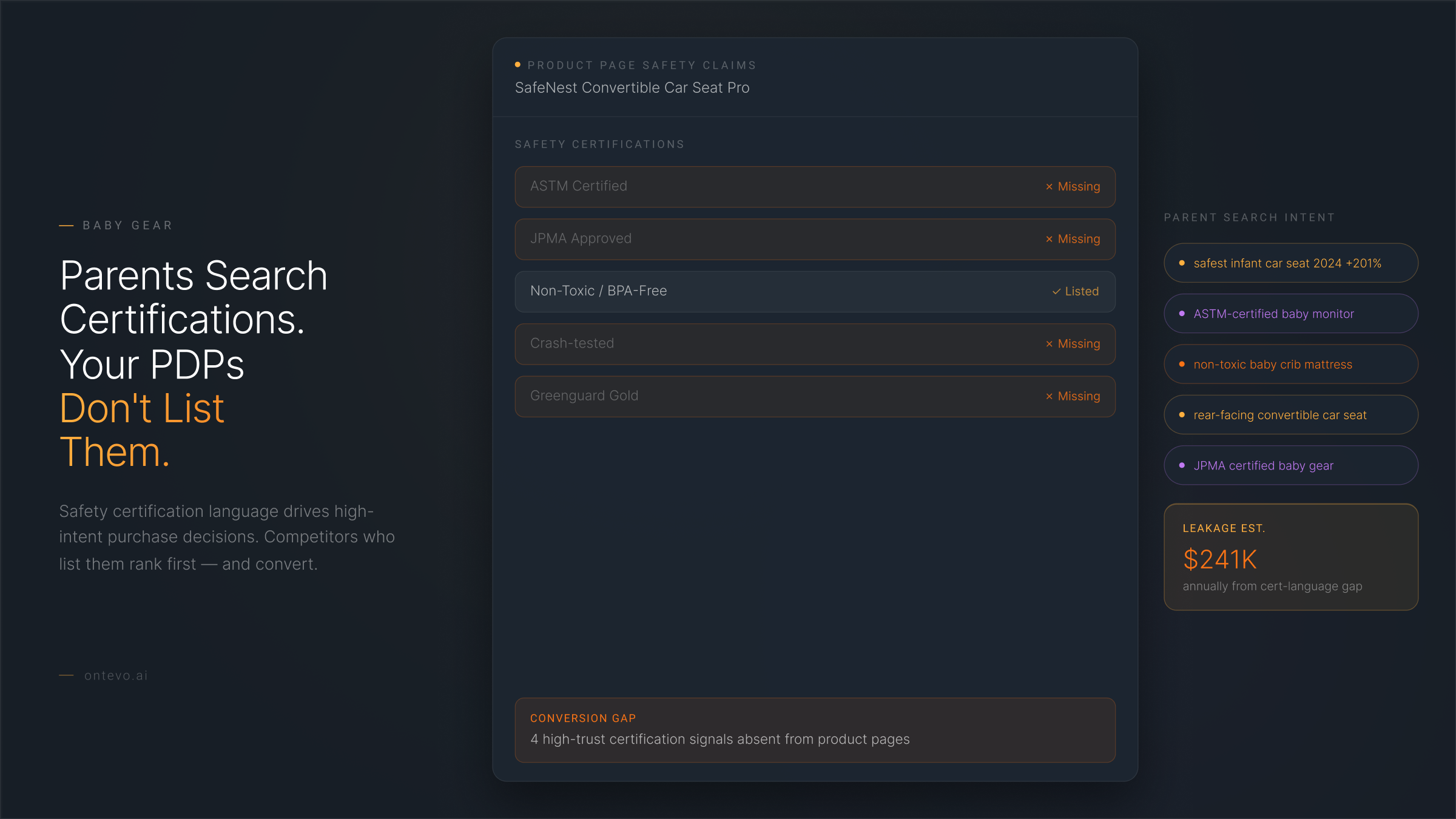
Baby gear brands lose conversions when important trust and use-case signals such as one-hand fold, safety confidence, and real usability are not obvious on the product page.
Baby gear is a trust-first category
Parents rarely shop baby gear casually. The decision window can be long, but the evaluation is intense. Product pages do not simply need to look good. They need to reassure buyers that the product is safe, practical, easy to use, and worth trusting in everyday life.
Features such as one-hand fold are not just specifications. They are proxies for usability, convenience, and reduced stress. Parents are not buying specs for their own sake. They are buying confidence that the product fits real life.
Use-case clarity beats generic premium language
Many baby brands use warm, premium, emotionally positive language. That can support the brand, but it should not replace practical clarity. A stroller or high-value baby product needs to answer real buying questions quickly.
Can I fold it with one hand? How secure is the harness? How heavy is it? How easy is it to clean? What part of daily life does it make easier? When those signals are buried, buyers keep searching.
Where trust breaks on the page
Trust often breaks in the gap between what parents need to know and what the page chooses to emphasize. Some pages over-index on brand story while under-explaining the product. Others list features without translating them into lived benefits.
A high-converting page anticipates the buyer's concern path. First, establish the practical advantage. Second, support it with proof. Third, remove anxieties around ease, fit, assembly, care, or safety. Fourth, use reviews and FAQs to resolve lingering doubt.
Reviews are powerful in parenting categories
Parents want to hear from people who have already lived with the product. Reviews reveal what future buyers need answered. If recurring reviews say a stroller folds easily, fits in a trunk, or feels secure on rough sidewalks, those signals deserve stronger PDP visibility.
If reviews repeatedly surface confusion around assembly, comfort, or cleaning, the page and supporting assets need to work harder. In baby gear, reassurance is part of the product experience.
How Ontevo helps baby gear brands
Ontevo reads market signals, reviews, competitor proof, and page structure to identify where trust breaks. The Rapid Scan returns the most important findings as Truth Cards with evidence, impact, and a drafted fix.
For baby gear brands, that could mean moving one-hand fold proof higher, clarifying safety cues, strengthening usability demonstrations, or restructuring the PDP around the questions parents actually ask.
FAQ
What makes a baby gear product page convert better? Clear use-case messaging, visible trust signals, persuasive demonstrations, and proof that reduces uncertainty for parents.
Why do parents compare one-hand fold and safety signals? Because those cues help them judge whether the product will make daily life easier and feel trustworthy in real use.
How can baby brands reduce trust-related drop-off? Audit the decision path, surface practical proof earlier, and use market signals and reviews to refine the PDP around buyer concerns.
Conclusion
Baby gear is won in the details buyers trust. Run the Rapid Scan to see which trust gaps may be leaking sales.
Ontevo Research. Where this post carries figures, they come from Ontevo's own scan corpus or are modeled from scan patterns across the category. No figure is measured from a named customer.