Transfer-Proof Is Not Optional When Shoppers Open Five Tabs.
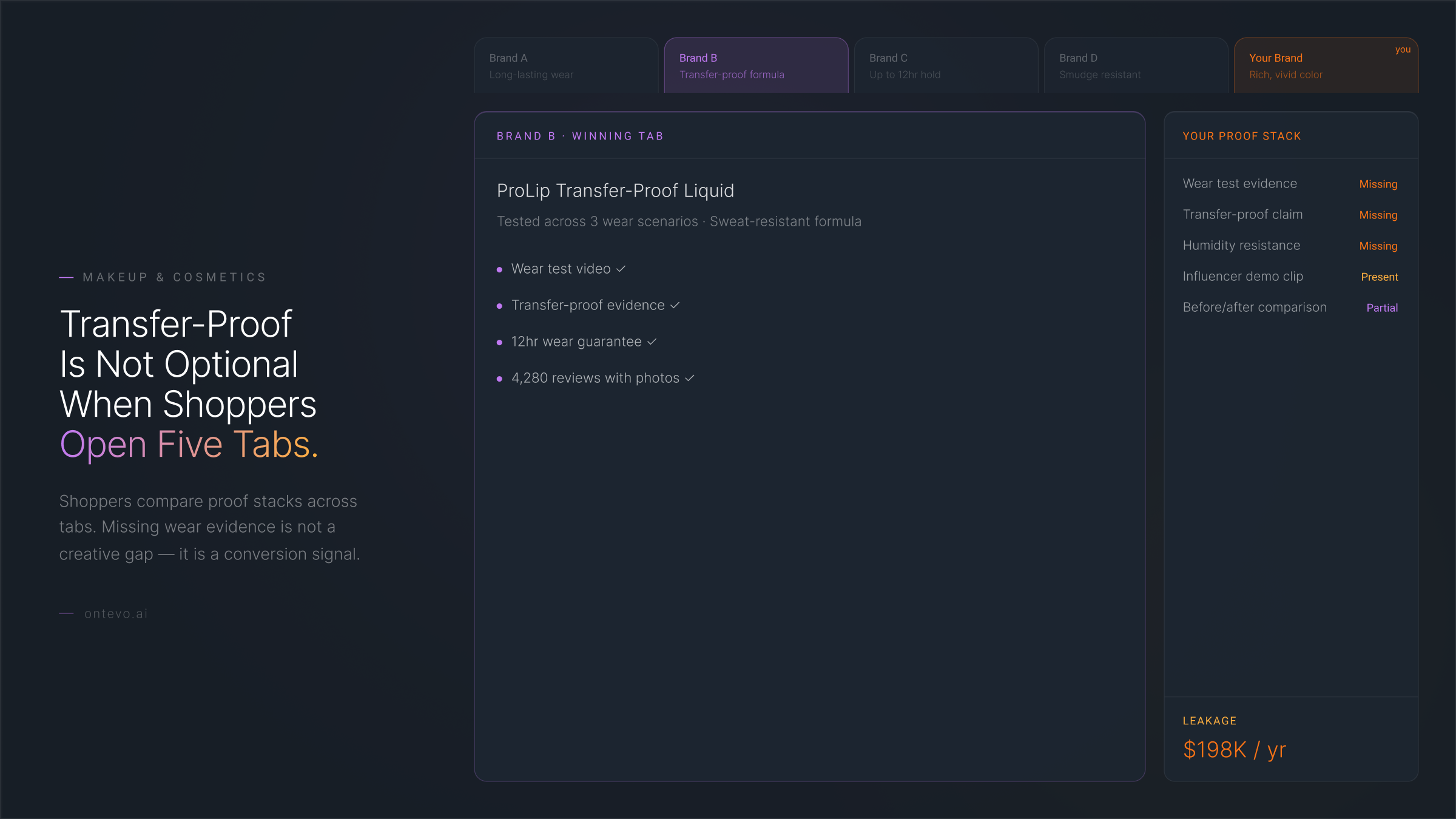
Makeup brands lose conversion when product pages fail to surface the specific proof comparison shoppers want, including transfer-proof, wear-test, finish, and shade-match confidence.
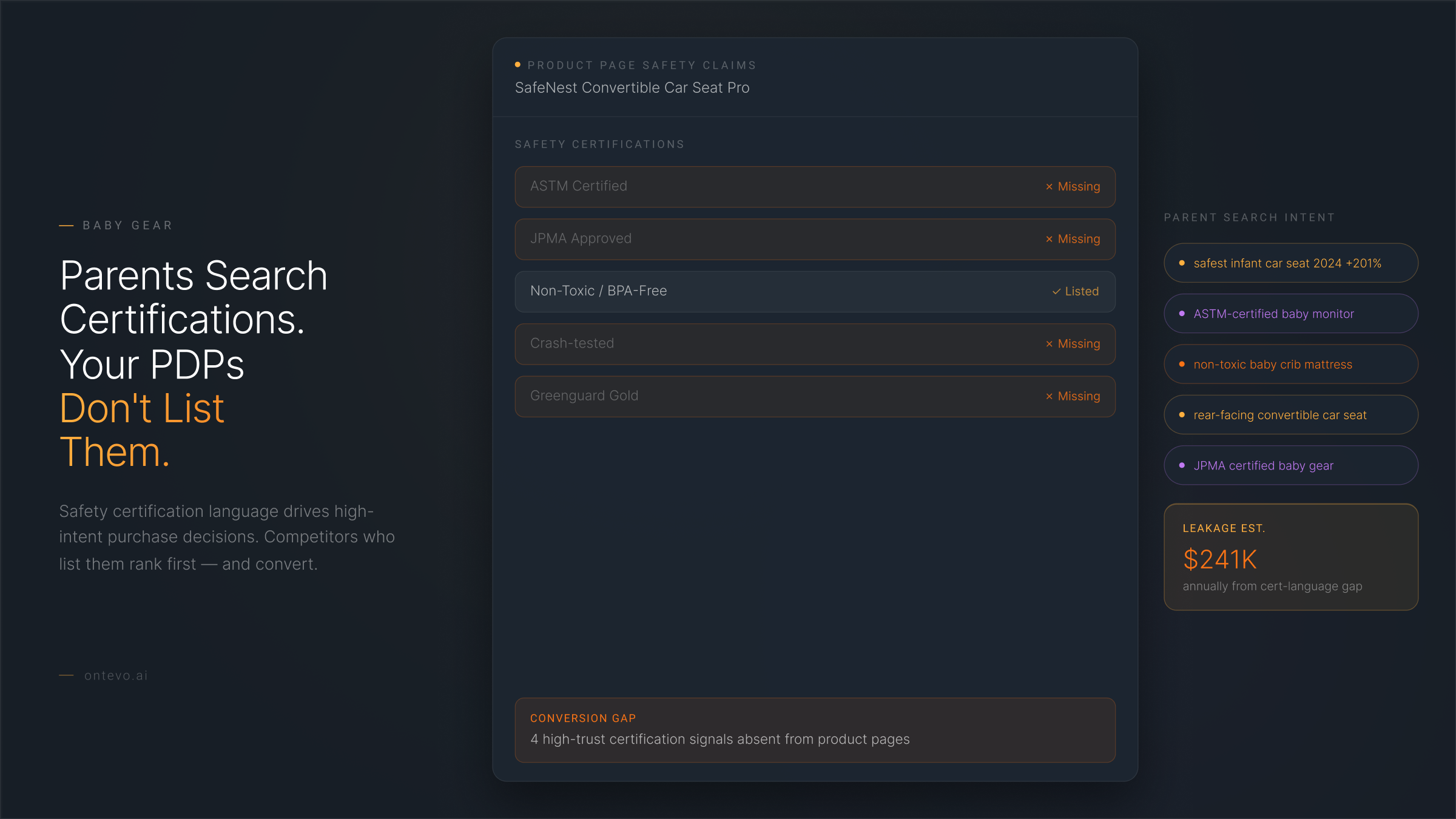
The comparison shopper is not reading like a brand strategist
Color cosmetics buyers compare quickly and specifically. They are not reading every paragraph on a product page. They are looking for confidence markers that help them decide whether your product deserves a closer look.
For complexion products, that often means shade match, finish clarity, transfer resistance, wear time, undertone support, and proof of performance. If the comparison set makes those signals easy to see and your page stays vague, the shopper reads the silence as weakness.
Why PDP silence costs more than teams realize
Paid traffic is expensive enough that even modest product-page leakage becomes a serious growth problem. Every missing proof point taxes acquisition. The ad may drive the click, but the page has to complete the argument.
A page that says “beautiful finish” while competitors show transfer-proof claims, wear testing, shade guidance, and review proof loses the side-by-side comparison before checkout. That is why makeup PDP optimization is not only about design. It is about proof architecture.
The proof modules that drive confidence
Different products need different proof stacks, but the principle is consistent. A makeup PDP should surface the category-standard evidence the buyer expects: wear-test claims, transfer resistance, undertone guidance, shade-matching help, ingredient clarity, creator demonstration, and review themes.
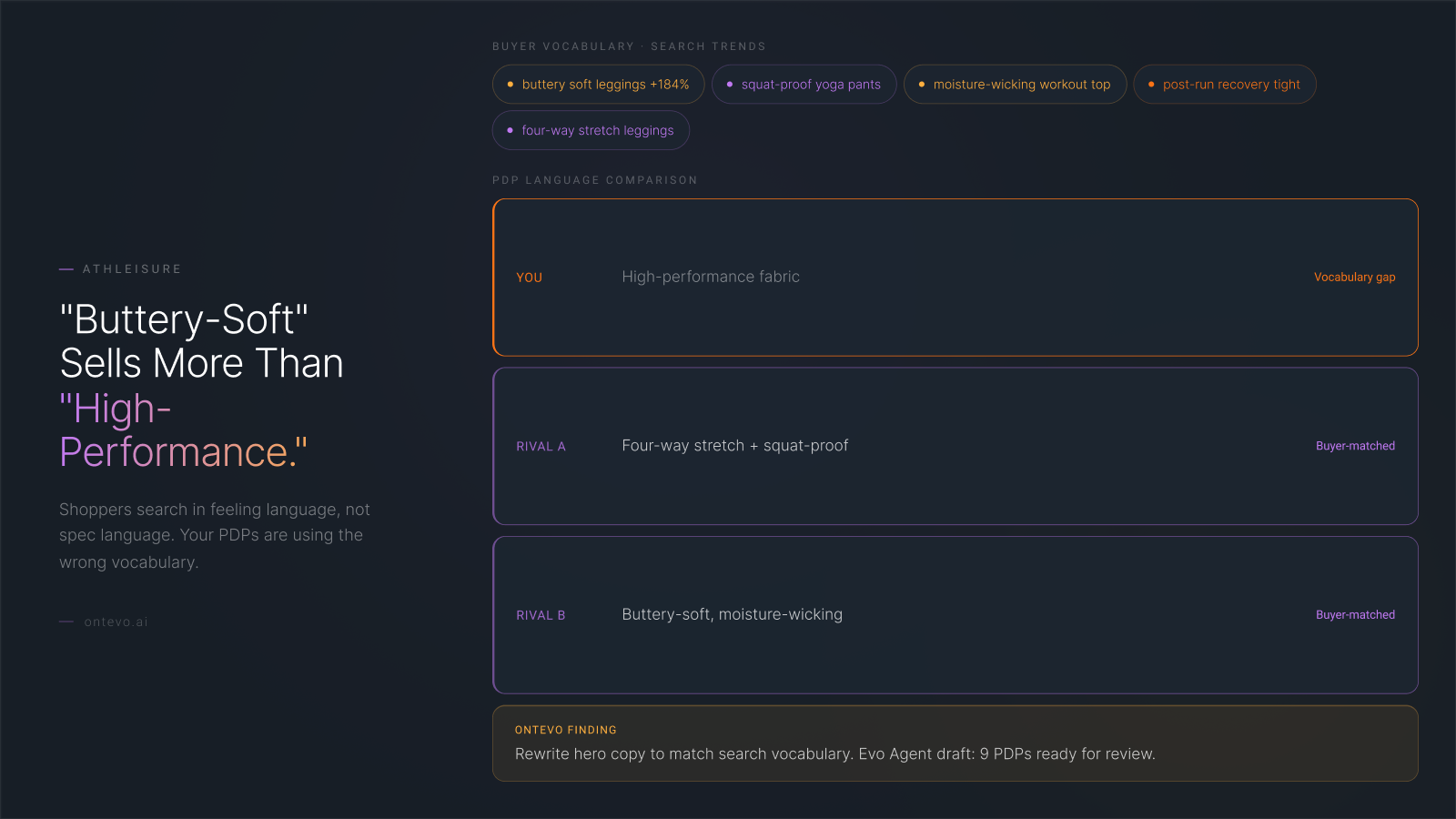
The page should also reduce interpretation work. A shopper should not have to infer whether a product is matte, dewy, long-wear, beginner-friendly, or suitable for their skin tone. The stronger the page communicates fit, the less effort the buyer spends resolving doubt.
Reviews are conversion intelligence
Reviews reveal what current customers loved and what future buyers worry about. If positive reviews consistently mention all-day wear, those words should inform the PDP. If negative reviews repeat oxidation, patchiness, or shade confusion, the page should handle those objections earlier.
That does not mean cherry-picking reviews. It means treating repeated review language as a market signal. What is the page not saying that buyers keep needing to discover elsewhere?
How Ontevo helps makeup teams act faster
Ontevo reads public market signals, competitor pages, buyer language, and review patterns to show where a product page is underpowered. The Rapid Scan surfaces the highest-value proof gaps and turns them into Truth Cards with evidence, impact, and a drafted fix.
For a makeup brand, that could mean restructuring the hero message, making shade support more visible, adding transfer-proof proof, or rewriting FAQs around the objections shoppers are already raising.
FAQ
What should a makeup product page include? It should make the product type, finish, use case, core proof, and buying support easy to understand, ideally within the first screen and adjacent support modules.
Why do transfer-proof and wear claims matter? Shoppers frequently compare those claims side by side. Missing proof can cause the page to lose consideration before price is evaluated.
How can makeup brands reduce PDP drop-off? Identify which proof shoppers need most, then restructure the page so shade confidence, expected results, and objection handling are clearer earlier.
Conclusion
Makeup buyers do not abandon a PDP only because it looks weak. They abandon it when it fails to answer the right questions quickly enough. Run the Rapid Scan to see where proof gaps may be leaking conversion.
Ontevo Research. Where this post carries figures, they come from Ontevo's own scan corpus or are modeled from scan patterns across the category. No figure is measured from a named customer.