How to Fix Your Google Business Profile in 2026: The Complete 15-Point Scan
The $108K Invisible Leak
The median med spa generates $1.2M in annual revenue, roughly $100K/mo. Across 8,841 US med spas, demand-mapping data shows that practices with misaligned GBP listings lose 8–12% of their addressable monthly revenue to semantic gaps alone.
That's $8K–$12K/mo. Annualized: roughly $108K.
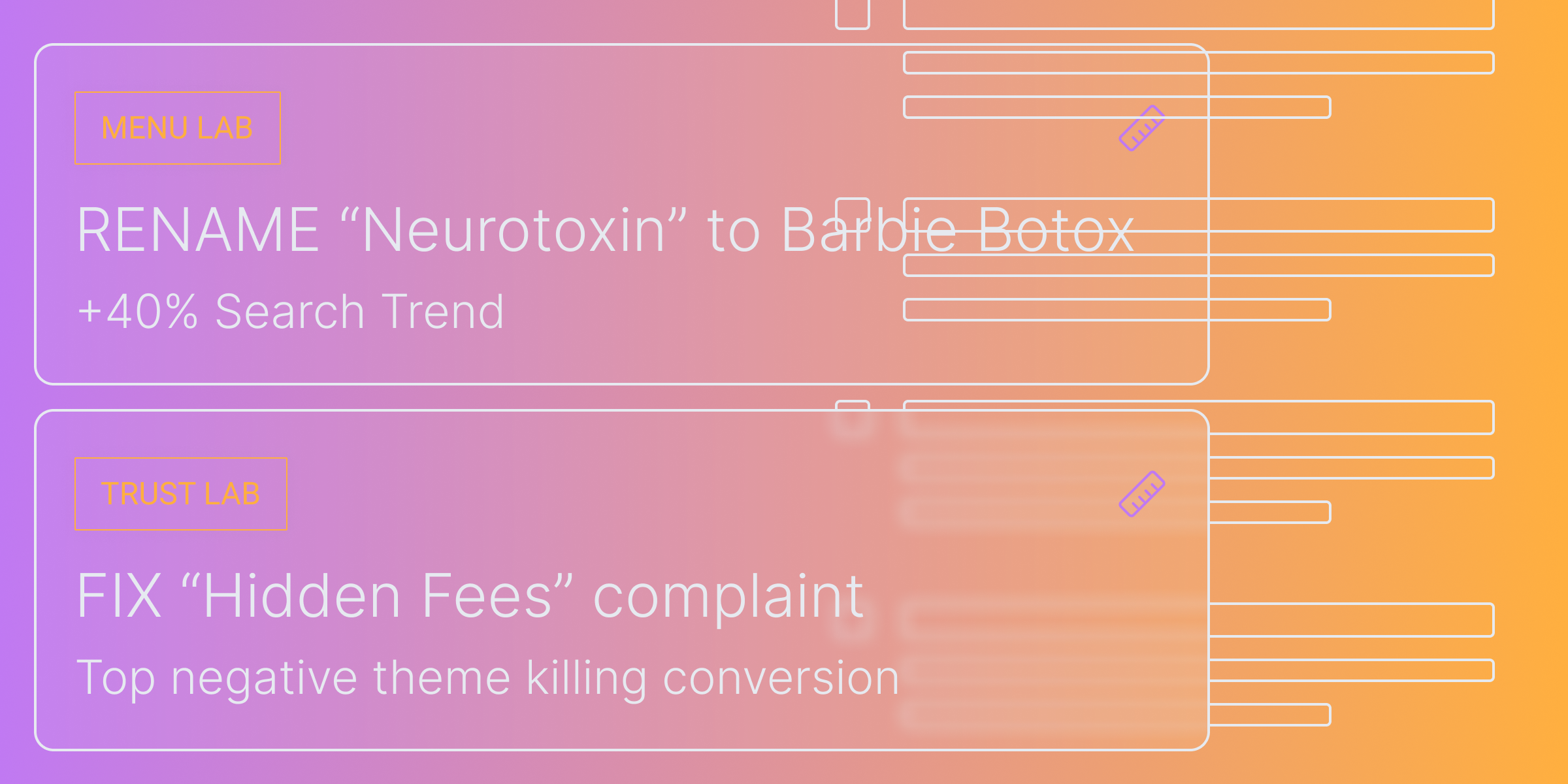
The practice isn't bad, and the ads are running. The leak happens because the GBP says "Botox Cosmetic" while patients search "traptox near me," a term with 340% more demand than generic Botox searches in high-growth markets.
Every service business has a version of this leak:
- Dental practices list "Dental Implants" but not "Sedation Dentistry," missing the fear-driven segment that needs reassurance before they'll even book a consult.
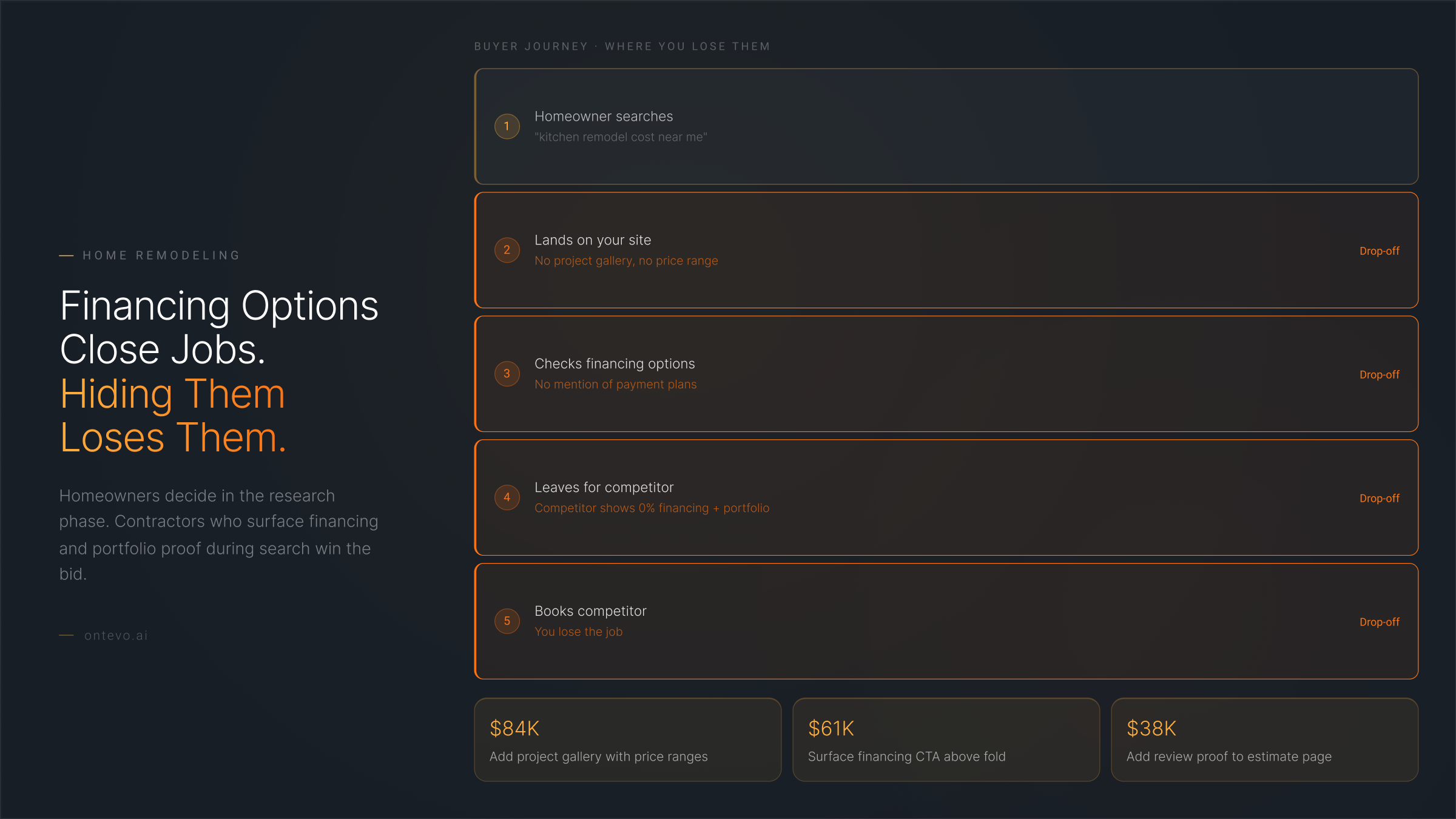
- Remodelers list "Kitchen Remodeling" but not "Dust-Free Remodel," the exact phrase that appears in 70% of negative competitor reviews as an unmet expectation.
Your GBP is a demand-capture surface, not a digital business card. If it doesn't reflect what the market is searching for right now, you're invisible to the highest-intent buyers in your area.
The 15-Element GBP Audit Framework
We organized this audit into 4 categories, each building on the last:
- Category A: Accuracy Foundation (Elements 1–4): NAP consistency, hours, primary category, website URL.
- Category B: Completeness Signals (Elements 5–9): Photos, Q&A, service descriptions, attributes, GBP posts.
- Category C: Demand Alignment (Elements 10–13): Service-level keyword mapping, secondary categories, product/service listings, menu-to-demand gap analysis.
- Category D: Reputation Velocity (Elements 14–15): Review response time/quality, review volume trajectory vs. local cohort.
Every GBP guide on the internet covers A and B. Categories C and D are where the $108K lives.
Category A: Accuracy Foundation (Elements 1–4)
Element 1: NAP Consistency
Name, Address, Phone: identical across GBP, your website, Yelp, Healthgrades, RealSelf, Apple Maps, and every data aggregator that feeds local search.
Even a suite number discrepancy ("Ste 200" vs. "#200") can suppress your Local Pack ranking. Google's algorithm treats inconsistency as a lack-of-trust signal.
Action: Check your top 10 citation sources. Fix every discrepancy, no matter how small.
Element 2: Hours & Special Hours
Include holiday hours, seasonal hours, and any recurring closures. A med spa that doesn't update hours for a Monday closure loses the patient who drove 20 minutes and found a locked door. That patient doesn't come back; they go to the competitor whose hours were accurate.
Element 3: Primary Category Selection
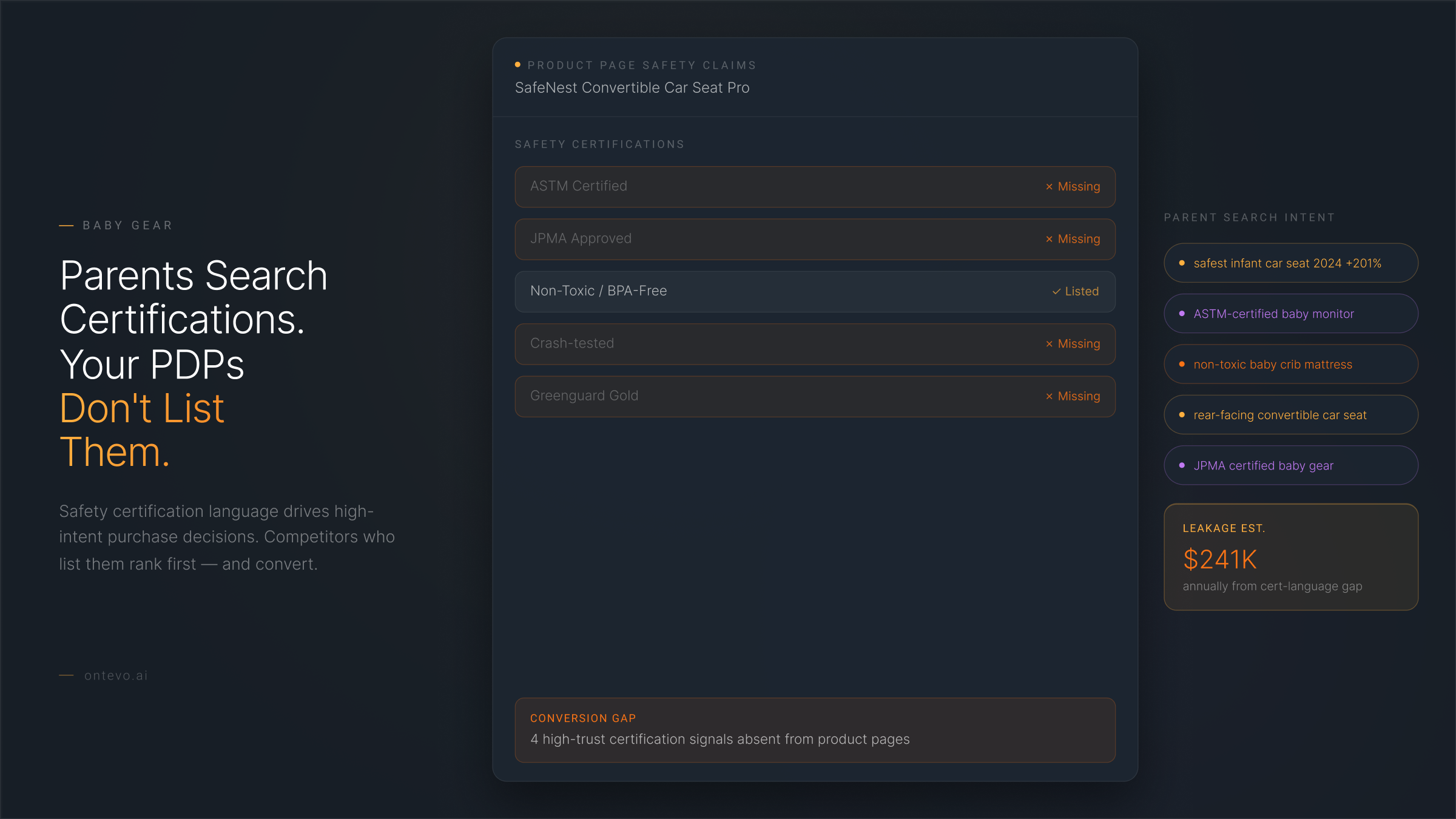
Deceptively important. "Medical Spa" vs. "Day Spa" vs. "Skin Care Clinic": each triggers different search contexts and different competitor sets.
- Dental: "Dental Implants Provider" vs. "Dentist": the first captures high-value implant searches; the second competes with every general practice in town.
- Remodeling: "Kitchen Remodeler" vs. "General Contractor": the first matches homeowner intent; the second puts you in a pool with commercial builders.
Wrong category = wrong search results = wrong patients.
Element 4: Website URL & UTM Tracking
Link to a service-specific landing page, not your homepage. A med spa linking GBP to their homepage instead of /services/traptox loses the intent match that Google rewards.
Add UTM parameters so you can track GBP-sourced traffic separately in your analytics. Without this, you're flying blind on which GBP fixes actually drive bookings.
Category B: Completeness Signals (Elements 5–9)
Element 5: Photos
The cohort median for med spas is 45 photos on GBP. Many practices have only 8.
Google's own documentation (2021, the most recent publicly available data) confirms that businesses with photos receive 42% more direction requests and 35% more click-throughs to their websites. In 2026, with visual search and AI-generated local results, that gap has only widened.
What to photograph: Treatment rooms, before/after results (with proper consent; see the regulatory section below), staff headshots, the waiting area, parking, and the building exterior. Patients want to know what they're walking into before they walk in.
Element 6: Q&A Section
Seed your own Q&A with the top 5 questions patients ask at the front desk. If you don't, random users (or competitors) will.
Example: "Do you offer Traptox?" If that question sits unanswered on your GBP, you're ignoring a demand signal in public. Worse, a competitor could answer it for you, and not in your favor.
Element 7: Service Descriptions
Each service listed on GBP should have a 150–300 word description using the language patients actually use, not clinical jargon.
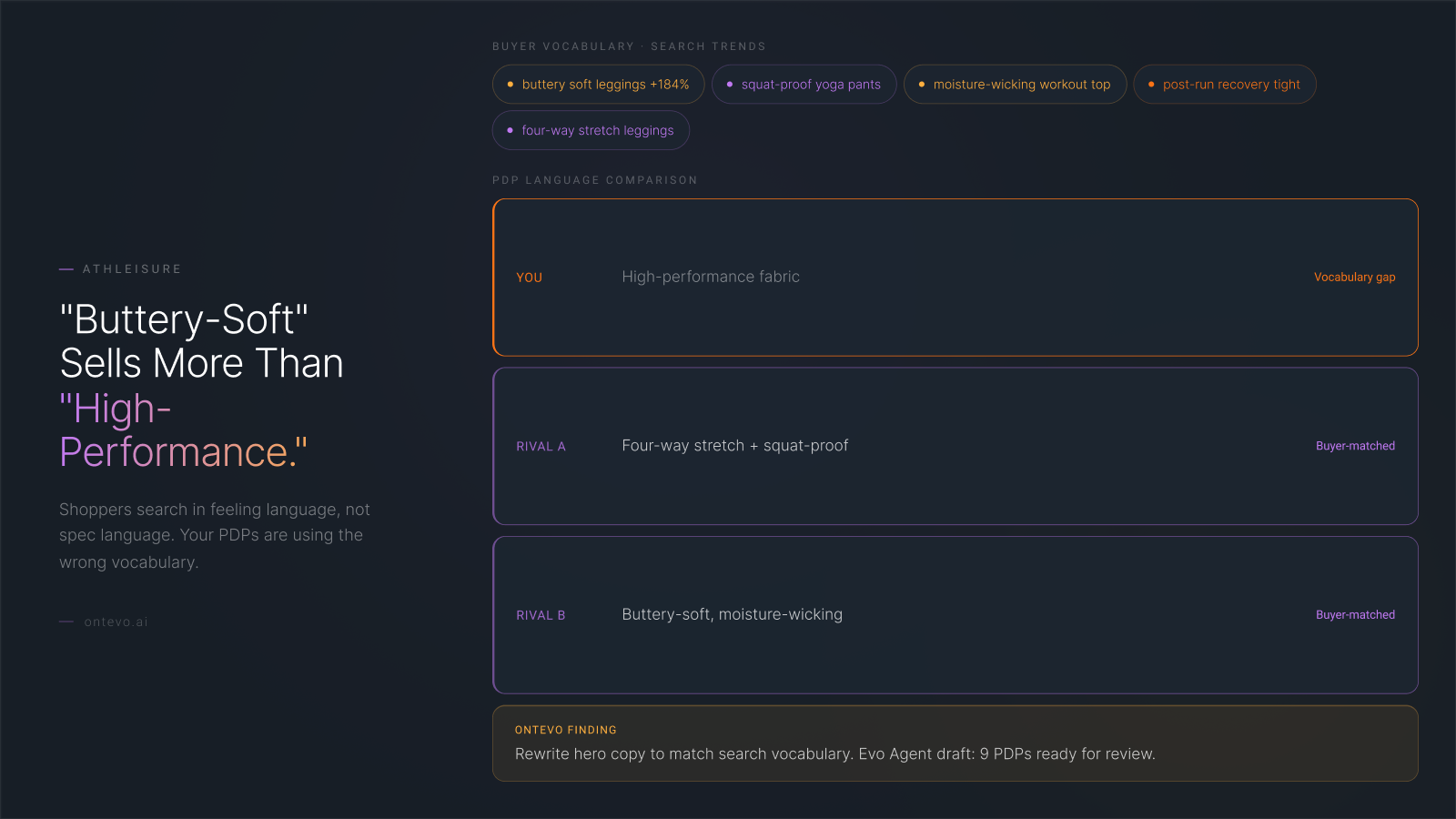
Write "Trapezius Botox for neck and shoulder slimming," not just "Botulinum Toxin Type A." The first matches how patients search. The second matches how your EMR categorizes it. Google cares about the first.
Element 8: Attributes
Google offers dozens of attributes: wheelchair accessible, LGBTQ+ friendly, appointment required, free Wi-Fi, and more. Every unchecked attribute is a missed filter match. When a patient filters for "appointment required" and your profile doesn't have it checked, you disappear from their results even if you're the best in town.
Element 9: GBP Posts
Practices with zero posts in 90 days signal abandonment. Google's freshness signals reward active profiles.
Post weekly: trending treatments, seasonal specials, patient education, team introductions. Each post is a micro-content surface that can rank in local search and keeps your profile from looking like it was last touched in 2023.
Category C: Demand Alignment (Elements 10–13)
Everything above is necessary. Everything below is where the money is: the elements that separate a complete profile from a profitable one.
Element 10: Service-Level Keyword Mapping
Here's the core problem: patients search "traptox," "lip flip," "baby botox," "prejuvenation." Your GBP lists "Botox Cosmetic" and "Dermal Fillers."
That semantic gap makes you invisible to 40%+ of injectable search demand.
We broke down the full revenue math in Menu Stagnation Is Costing MedSpas $10K+/mo. The GBP implication is immediate: every service on your profile should be mapped to the actual search terms patients use, not your internal nomenclature.
Think of it as a translation layer. Your practice calls it "Botulinum Toxin Type A (Trapezius)." The market calls it "Traptox." Your GBP needs to speak the market's language.
Element 11: Secondary Categories
Google allows multiple secondary categories. Most practices select one primary and ignore the rest.
A med spa should add "Laser Hair Removal Service," "Skin Care Clinic," and "Weight Loss Service" (if offering GLP-1 protocols). Each secondary category opens a new search surface: a new set of queries where your profile can appear.
A dental implant practice should add "Cosmetic Dentist" and "Oral Surgeon." A remodeler should add "Bathroom Remodeler" and "Home Improvement Store" if they have a showroom.
Element 12: Product/Service Listings
GBP's product and service editor lets you create individual entries with photos, descriptions, and prices. Most practices leave this section completely blank.
Each entry is an indexable surface for long-tail searches. "Morpheus8 combination protocol [city]" is a real search query. If you have a GBP service listing for it with a photo, description, and price range, you capture that intent. If you don't, your competitor does.
Element 13: The Menu-to-Demand Gap
This is the step no other GBP guide covers, and it's the highest-value element in this entire audit.
Cross-reference your GBP service listings against local search volume data and your competitors' profiles. What you're looking for:
- Market shifts you've missed: 60% of the local med spa cohort now lists "GLP-1 weight management" as a service. If you don't, you're missing a market shift, not just a listing.
- Bundling gaps: If 4 of 5 competitors bundle Morpheus8 + PRF into a "Regenerative Glow" protocol at $2,800/session and you sell them à la carte, your AOV gap is $200–$400 per visit.
- Language gaps: Traptox has 340% more search demand than generic Botox queries in high-growth markets. If your GBP doesn't mention it by name, you're invisible to that demand.
Category D: Reputation Velocity (Elements 14–15)
Element 14: Review Response Time & Quality
The local med spa cohort median response time is 18 hours. If you're responding in 72 hours with copy-paste templates, you signal indifference to a patient choosing between 3 clinics with identical star ratings.
Quality matters more than speed alone. A response that addresses the specific concern ("We're sorry the Morpheus8 recovery was more intense than expected. Our nurse will call you today to discuss aftercare") converts lurkers reading your reviews. A response that says "Thanks for your feedback!" does not.
The top 5 negative review themes destroying med spa conversion:
- Felt rushed
- Pushy upselling
- Bruising/results mismatch not disclosed
- Unreachable for rescheduling
- Long wait times
Responding to these themes publicly, and fixing them operationally, is the highest-ROI GBP activity you can do this quarter.
Element 15: Review Volume Trajectory
Your star rating is only half the signal. The other half is your velocity relative to competitors.
If the practice across town added 23 new 5-star reviews in 60 days and you added 4, both Google's algorithm and prospective patients notice. Review recency is a ranking signal and a trust signal.
Benchmark yourself: pull the last 90 days of reviews for your top 3 local competitors. Count the volume. Compare. If you're behind, you have a velocity problem, and no amount of Category A work will fix it.
What This Looks Like Across Verticals
The same framework applies whether you're a med spa, a dental practice, or a remodeling contractor. The specific gaps change. The pattern doesn't.
MedSpa
A practice listing "Botox" captures only 60% of injectable demand. Adding "Traptox," "Lip Flip," "Baby Botox," and "Prejuvenation Package" as named GBP services captures the other 40%. Revenue impact: $8K–$12K/mo.
Dental
A practice listing "Dental Implants" but not "Sedation Dentistry," "Same-Day Implants," or "All-on-4" misses the fear-driven segment entirely. The same dynamic plays out at every step from search to booked consult: 62% of implant consults ghost, and GBP is the first place patients look for reassurance. When your profile signals comfort ("IV sedation available," "VIP Recovery Package"), ghost rates drop.
Remodeling
A contractor listing "Kitchen Remodeling" but not "Dust-Free Remodel," "Daily Photo Updates," or "Fixed-Price Guarantee" loses to the competitor whose GBP communicates process trust. Remodelers face the proposal gap that costs $22K/mo, and it starts with a GBP that communicates price instead of process.
The Regulatory Layer: What You Can and Can't Do
MedSpa & Dental
- State medical/dental boards: Rules vary by state. Many prohibit before/after photos without specific disclosures, restrict testimonials, and require supervising physician identification.
- FDA: Off-label marketing claims are prohibited. You can't promote Botox for areas not FDA-cleared in your GBP service descriptions.
- FTC: Paid endorsements and incentivized reviews require transparent disclosure.
Remodeling
- Fewer healthcare regulations, but state contractor licensing requirements apply.
- FTC truth-in-advertising rules govern claims like "dust-free": if you claim it, your containment protocol must deliver it.
- BBB standards and state consumer protection laws apply to pricing claims and guarantees.
Practical guidance: Consult your compliance team before posting before/after imagery. Respond to negative reviews without confirming patient status ("We take every concern seriously. Please call our office so we can discuss this directly"). Describe services accurately without making off-label or unsubstantiated claims.
The Step-by-Step Audit Process
Bookmark this section: it's the operational playbook.
Step 1: Export your current GBP data. Go to Google Business Profile Manager → Info tab. Document every field.
Step 2: Run a NAP consistency check. Compare your GBP against your top 10 citation sources: website, Yelp, Healthgrades (medical), RealSelf (medspa), Houzz (remodeling), Apple Maps, Facebook, Bing Places, Yellow Pages, and your primary data aggregator. Fix every discrepancy.
Step 3: Screenshot your competitors' GBP service listings. Pull the top 3–5 practices in your local pack. Document every service they list that you don't. This is your demand-alignment gap in raw form.
Step 4: Pull local search volume for your top 10 treatments/services. Use Google Keyword Planner, Semrush, or Ahrefs. Map each search term to your GBP service listings. Identify the gaps: the terms patients search that your profile doesn't mention.
Step 5: Audit your photo count vs. cohort median. If you're below 45 (the med spa cohort median), schedule a photo shoot. Prioritize treatment rooms, results, staff, and the physical space.
Step 6: Seed 5 Q&A entries. Base them on the most common questions your front desk or intake team fields. Answer them thoroughly, using patient language.
Step 7: Write 150–300 word service descriptions for every listed service. Use the search terms from Step 4, not your internal nomenclature. "Trapezius Botox for neck and shoulder slimming," not "Botulinum Toxin Type A."
Step 8: Check all applicable attributes. Go through every attribute Google offers for your category. Check everything that's true. It takes 5 minutes and expands your filter visibility permanently.
Step 9: Schedule weekly GBP posts for the next 90 days. Trending treatments, seasonal specials, patient education, team introductions. Batch-create them now so you don't fall off in week 3.
Step 10: Benchmark your review response time. Pull your last 20 reviews. Calculate the average time between review posting and your response. Set a target of under 12 hours.
Step 11: Analyze your last 50 reviews for the top 3 negative themes. Categorize each negative review by theme (wait time, communication, results mismatch, etc.). Create an operational fix plan for each: not just a better response template, but an actual process change.
Step 12: Calculate your review velocity vs. top 3 competitors. Count new reviews over the last 90 days for each. If you're behind, you need a systematic review generation process, not just a "please leave us a review" card at checkout.
From Audit to Action
Most businesses treat GBP as a set-it-and-forget-it listing. It's actually a living demand-capture surface that reflects (or fails to reflect) what your market is searching for right now.
This audit identifies the gaps. Closing them requires four ongoing disciplines:
- Update the listing: align service names, descriptions, and categories with current search demand.
- Align the website and menu: your GBP and your website should tell the same story in the same language.
- Build a review response protocol: sub-12-hour response times, specific and empathetic language, operational fixes for recurring themes.
- Monitor competitor moves quarterly: new services, new categories, new review velocity patterns.
You can do all of this manually. Steps 1–9 are a weekend project. Steps 10–12 are an ongoing discipline that requires weekly attention.
Ontevo's Visibility Architect and Reputation Defender agents automate these four disciplines: the Visibility Architect drafts service descriptions mapped to search demand, and the Reputation Defender drafts review responses within 2 hours. You approve everything before it publishes. But the framework above works whether you use a tool or a spreadsheet.
Either way, your GBP is capturing demand or leaking it. After this audit, you'll know which one, and exactly where the gaps are.
If you're already using a reputation management platform like Birdeye or Podium, the gap is in demand intelligence, not review solicitation. See how Ontevo compares to Birdeye for the full breakdown.
And if you're spending $1,149/mo across 3–4 siloed platforms (your EHR, patient comms tool, and marketing automation) and none of them can answer "which treatment should I promote next month and why?", the real cost is the strategic blindness, not the subscription fees.
Ontevo Research. Where this post carries figures, they come from Ontevo's own scan corpus or are modeled from scan patterns across the category. No figure is measured from a named customer.