Services as Software: Why the Next Wave of AI Replaces Labor, Not Dashboards
You're Paying $60K/Year for Someone to Read Your Dashboard
Here's a number that should bother you: the median med spa spends $1,149/month across 3–4 siloed platforms: EHR at ~$550, patient communication and booking at ~$400, marketing automation at ~$199. That's $13,788/year in software subscriptions.
And after all that spend, the owner still can't answer a basic question: Which treatment should I promote next month, and why?
That's a labor problem wearing a software costume, not a software problem.
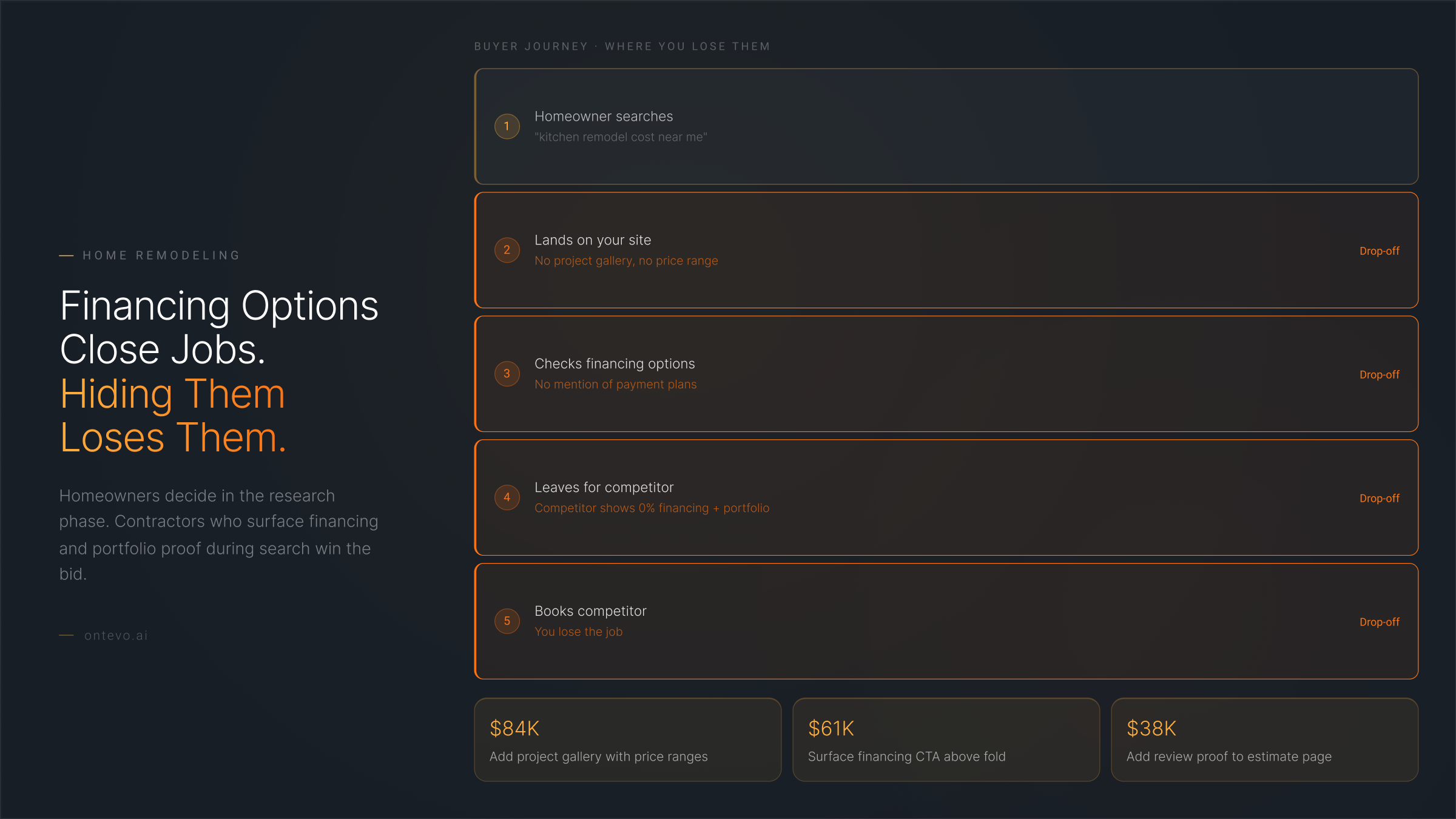
The pattern is identical across verticals. DTC skincare founders pay for Jungle Scout, Helium 10, review monitoring, and ad platforms, but can't connect a spike in 1-star reviews about packaging to their rising CAC. Remodeling contractors pay for ServiceTitan and marketing tools but can't connect the word "dust" in 70% of their negative reviews to their 40%+ proposal ghost rate.
The dashboard shows the symptom. Nobody's staffed to diagnose the cause. And nobody's staffed to execute the fix.
This is the thesis: the next wave of AI replaces the labor layer between data and action, not the dashboards. We call it Services as Software: not a buzzword, a structural shift in how small and mid-size businesses operate.
The Dashboard Graveyard: What $19K/Year Actually Buys You
Let's make this concrete. Take a med spa doing $1.2M in annual revenue, right at the industry median.
Their tech stack looks like this:
- EHR / Practice Management (Aesthetic Record, PatientNow): ~$550/month
- Patient Communication & Booking (Boulevard, Weave): ~$400/month
- Marketing Automation (ActiveCampaign, Mailchimp): ~$199/month
That's $1,149/month. But here's the kicker: 45% of med spas also use some form of intelligence or analytics tool at an average of ~$450/month. So the real stack cost is closer to $1,599/month: $19,188/year.
And the top pain point? Still "siloed data across platforms" and "inability to connect marketing spend to actual patient lifetime value for specific treatments."
Now layer on the execution cost. Dashboards show you things without doing anything about them. To act on what they show, you need a $3,000–$5,000/month agency or fractional CMO.
The real math: $1,599/month in dashboards + $4,000/month in agency fees = $5,599/month. That's $67,188/year for the privilege of having someone else read your dashboard and send you a PDF about it.
This is the model enterprise companies ran for decades: buy Salesforce, then hire Accenture to interpret it. The same pattern now plays out at the SMB level: a med spa owner approving social posts between patients, a remodeler writing proposals at midnight, a DTC founder manually responding to Amazon reviews.
The bottleneck was always the labor to act on the findings, never the findings themselves.
What "Services as Software" Actually Means
Let's define the term precisely, because the market is drowning in AI labels slapped on glorified chatbots.
Services as Software = autonomous AI agents that perform the work traditionally done by junior agency staff, virtual assistants, or the owner at 11pm. Not chatbots, and not dashboards with an AI badge, but agents that:
- Take a data input (e.g., a review sentiment analysis showing "felt rushed" appears in 22% of negatives)
- Generate a specific output (e.g., a drafted review response addressing the concern, a revised consultation flow, an updated GBP service description)
- Queue it for human approval
That last part is non-negotiable. Human-in-the-loop is a design principle, not a marketing phrase.
The owner's job shifts from "write the response" to "approve or edit the response." From "figure out what's wrong" to "decide whether to act on what the system found." That's a 10x reduction in cognitive load, not just a time savings.
Why now? LLM costs have dropped roughly 90% since 2023. That makes it economically viable to run a 50-point diagnostic and 13+ Evo Agents for a fraction of what a single junior marketing coordinator costs. The unit economics of intelligence + execution finally work at SMB price points.
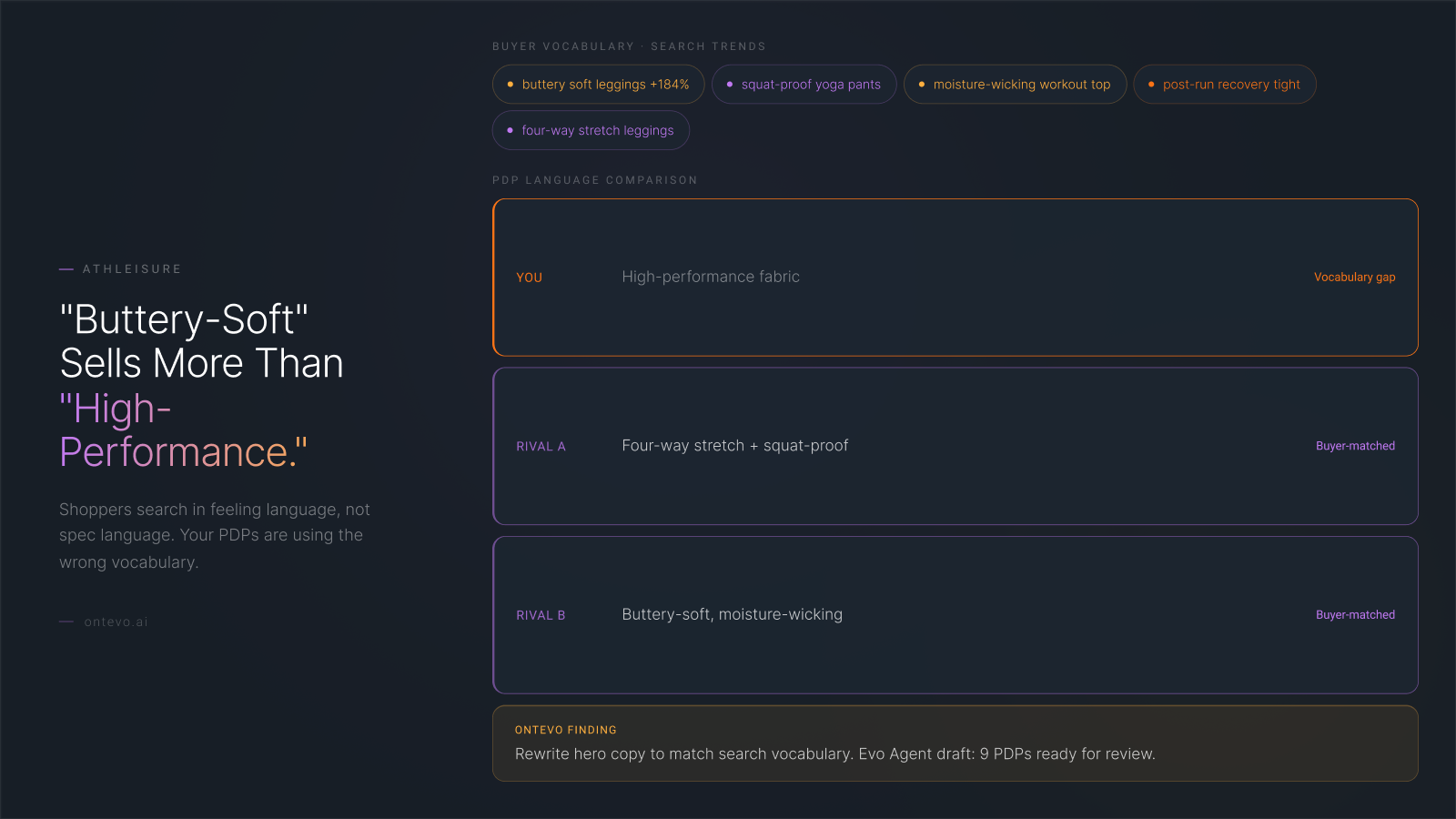
But raw LLM power isn't enough. A generic AI doesn't know that "traptox" maps to "trapezius neurotoxin injection," or that "dust-free remodel" maps to "containment protocol," or that "Glass Skin" means "Niacinamide + Hyaluronic Acid." Generic LLMs hallucinate these mappings. Vertical-specific ontologies (semantic bridges between how consumers talk and how businesses operate) are what make agents actually useful.
Agent Spotlight #1: The Menu Architect
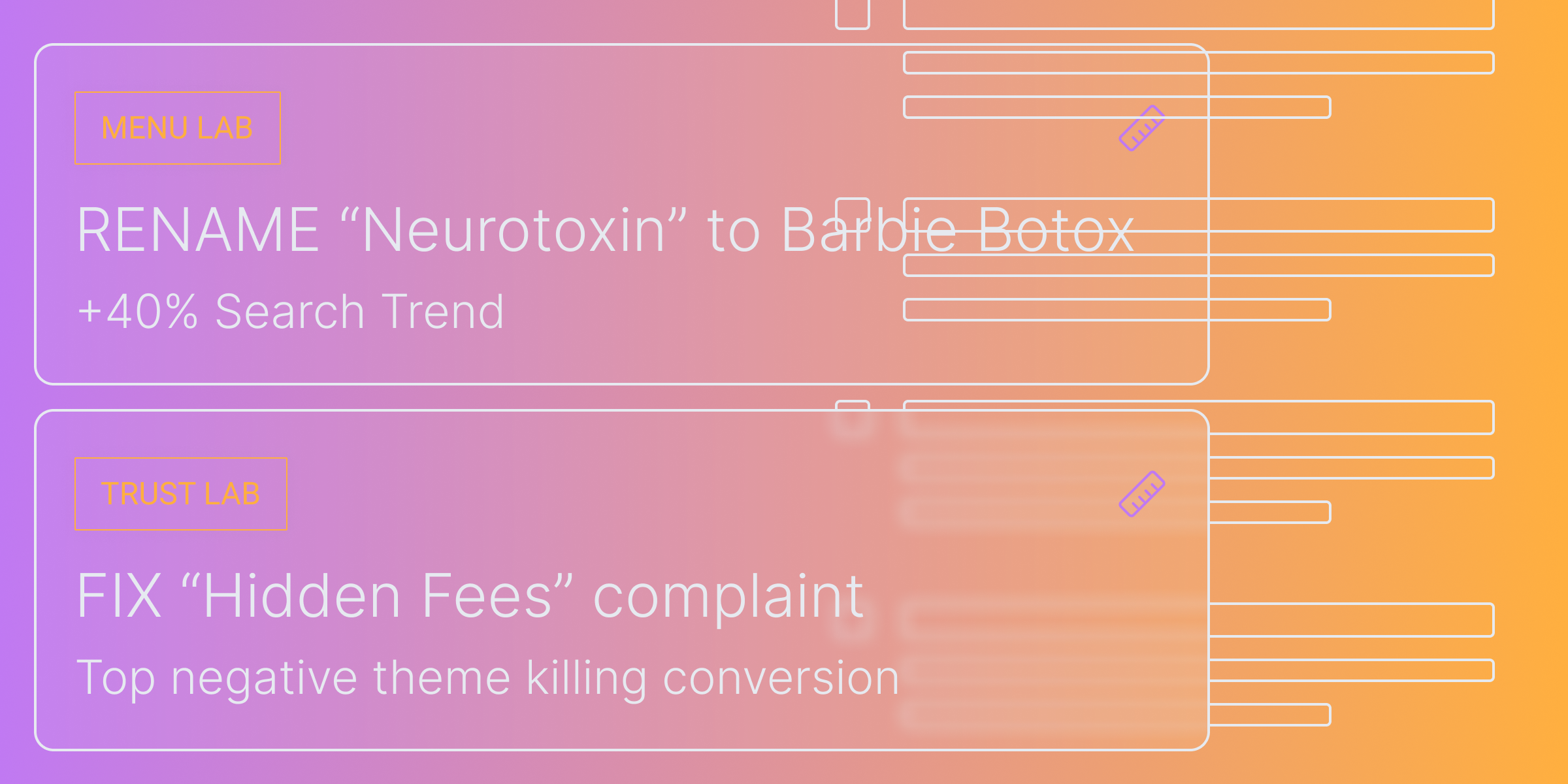
A med spa lists "Botox Cosmetic" on its Google Business Profile. Meanwhile, local search volume for "traptox near me" is up 210% year-over-year. The practice is invisible to a massive slice of injectable search demand.
This is a naming failure, not a marketing failure.
The medical aesthetics sector has grown 12–15% annually since 2021, driven by social media normalization, GLP-1-adjacent demand, and male demographic expansion. Demand is evolving fast. Menus aren't keeping up.
Here's what the Menu Architect agent actually does:
- Runs trend velocity mapping against local search volume
- Cross-references the practice's GBP service listings and website menu against current demand
- Identifies that 4 of 5 local competitors already list "traptox" and "lip flip" as named services
- Drafts updated GBP service descriptions, website menu copy, and a suggested bundle ("Prejuvenation Package" targeting the 25–35 demographic)
- Queues everything for the owner or practice manager to approve
Zero CapEx, no new equipment, no new staff, no new training. It's a naming and positioning fix that an agent drafts in minutes and a human approves in one sitting.
The revenue math: At $1.2M median annual revenue ($100K/month), a stale menu costs an estimated 8–12% of addressable monthly revenue: $8,000–$12,000/month, or roughly $108,000/year. Add a single bad device purchase at $4,500/month lease ($54K/year), and you're looking at $162,000/year in total waste.
Agent Spotlight #2: The Reputation Defender
The problem is universal. The specifics are vertical.
- Med spas: Median review response time is 18 hours. Practices responding in 72+ hours with copy-paste templates signal indifference to patients choosing between 3 clinics with identical star ratings.
- Remodelers: "Dust" and "communication" appear in 70% of negative reviews, not craftsmanship. But nobody's systematically addressing these in responses or process changes.
- DTC brands: 42% of 1-star reviews mention packaging, not formula. The brand keeps reformulating instead of fixing the jar.
Here's what the Reputation Defender agent does:
- Ingests all new reviews in real-time
- Classifies sentiment by theme: "felt rushed," "pushy upselling," "bruising expectations," "unreachable for rescheduling"
- Drafts a response that acknowledges the specific concern (not a generic "We're sorry you had this experience")
- Flags systemic patterns to the owner with a Truth Card showing frequency and estimated revenue impact
- Queues responses for approval: you review 5 drafted responses over coffee instead of spending 45 minutes writing them from scratch
Why this matters competitively: response quality and velocity are now ranking signals and conversion factors. A practice with 4.6 stars and thoughtful, specific responses to every review outperforms a 4.8-star practice with no responses. Beyond saving time, the agent changes the competitive position.
Agent Spotlight #3: The Voice Receptionist
In dental, 62% of implant consults ghost, and the top driver is fear, mentioned 3x more than clinical outcomes or price. In med spas, "impossible to reach for rescheduling or post-treatment questions" is a top-5 negative review theme. In remodeling, homeowners ghost $50K proposals because communication drops off after the initial visit.
The common thread: the phone rings, nobody answers promptly, or the response feels transactional.
The Voice Receptionist agent:
- Handles inbound calls with natural language understanding calibrated to the vertical: it knows that "traptox" = trapezius Botox, "All-on-4" = full-arch implant, "dust-free" = containment protocol
- Books appointments, answers FAQs, and triages urgent post-procedure concerns
- Logs every interaction with sentiment tags so the owner sees patterns ("12 callers this week asked about GLP-1 weight management, and we don't offer it yet")
- Escalates to a human when clinical judgment is needed
The labor math: a full-time receptionist costs $35,000–$45,000/year plus benefits. After-hours answering services cost $500–$1,500/month and deliver generic scripts. The Voice Receptionist operates 24/7 with vertical-specific intelligence at a fraction of either cost, and generates demand intelligence as a byproduct.
The Math: $60K Agency vs. Services as Software
Let's build the comparison honestly.
Traditional Stack (Annual):
- Dashboard software: $1,149/month → $13,788/year
- Intelligence tool (45% adoption): $450/month → $5,400/year
- Agency or fractional CMO: $3,000–$5,000/month → $36,000–$60,000/year
- Total: $55,188–$79,188/year
Services as Software: Intelligence layer + agent execution layer combined, replacing both the analytics tool AND the agency labor.
The price is the smaller point; the bigger one is that the labor layer collapses. Instead of paying humans to interpret dashboards and then execute by hand, agents do the execution and humans do the judgment.
The hidden cost nobody counts: owner time.
The typical med spa owner under $2M revenue is personally approving social media posts and reviewing Google listings between patients. That's a physician billing $300–$500/hour for injectable procedures spending 5–10 hours/week on $25/hour marketing tasks.
5 hours/week × $400/hour × 50 weeks = $100,000/year in opportunity cost. That's clinical revenue evaporating into marketing busywork.
Services as Software replaces the agency and gives the owner back clinical hours. The shift is from "spend 3 hours rewriting your GBP listing" to "an agent drafts it in 30 seconds, you approve it in 30 seconds."
Important caveat: Services as Software replaces the manual labor of execution, not strategic thinking. You still need to decide whether to add GLP-1 to your menu. But you shouldn't need to spend a weekend rewriting your website to reflect that decision.
What This Isn't: The Honest Limitations
Not a replacement for professional judgment. The Menu Architect can tell you that traptox demand is up 210% YoY, but it can't tell you whether your injectors are trained for trapezius injections. The Voice Receptionist can triage calls, but it escalates anything requiring medical advice. Human-in-the-loop is a design principle, not a marketing phrase.
Not magic for broken fundamentals. If your med spa has a 2.8-star rating because injectors are undertrained, no amount of AI-drafted review responses will fix that. If your remodeling company actually leaves dust everywhere, a better proposal won't save you. Services as Software amplifies competence; it doesn't create it.
Not fully autonomous, and shouldn't be. Every agent drafts; you approve. In medical aesthetics, state medical board advertising rules vary significantly. FDA prohibits off-label marketing claims. An agent that auto-publishes without human review is a compliance liability, not an efficiency gain.
The Shift: From Buying Tools to Hiring Agents
Here's the mental model shift that matters:
Stop evaluating software by features. "Does it have a review dashboard? Does it have a booking widget?" Features describe what you can see.
Start evaluating by outcomes. "Does it draft my review responses? Does it update my listings when demand shifts? Does it flag when a competitor adds a service I don't offer?" Outcomes describe what gets done.
The pattern is universal across verticals; only the ontology changes:
- In cookware, the agent benchmarking your PDP specs against 4 of 5 competitors claiming "Metal Utensil Safe" is doing the same structural work as the med spa agent benchmarking your menu against competitors listing "traptox"
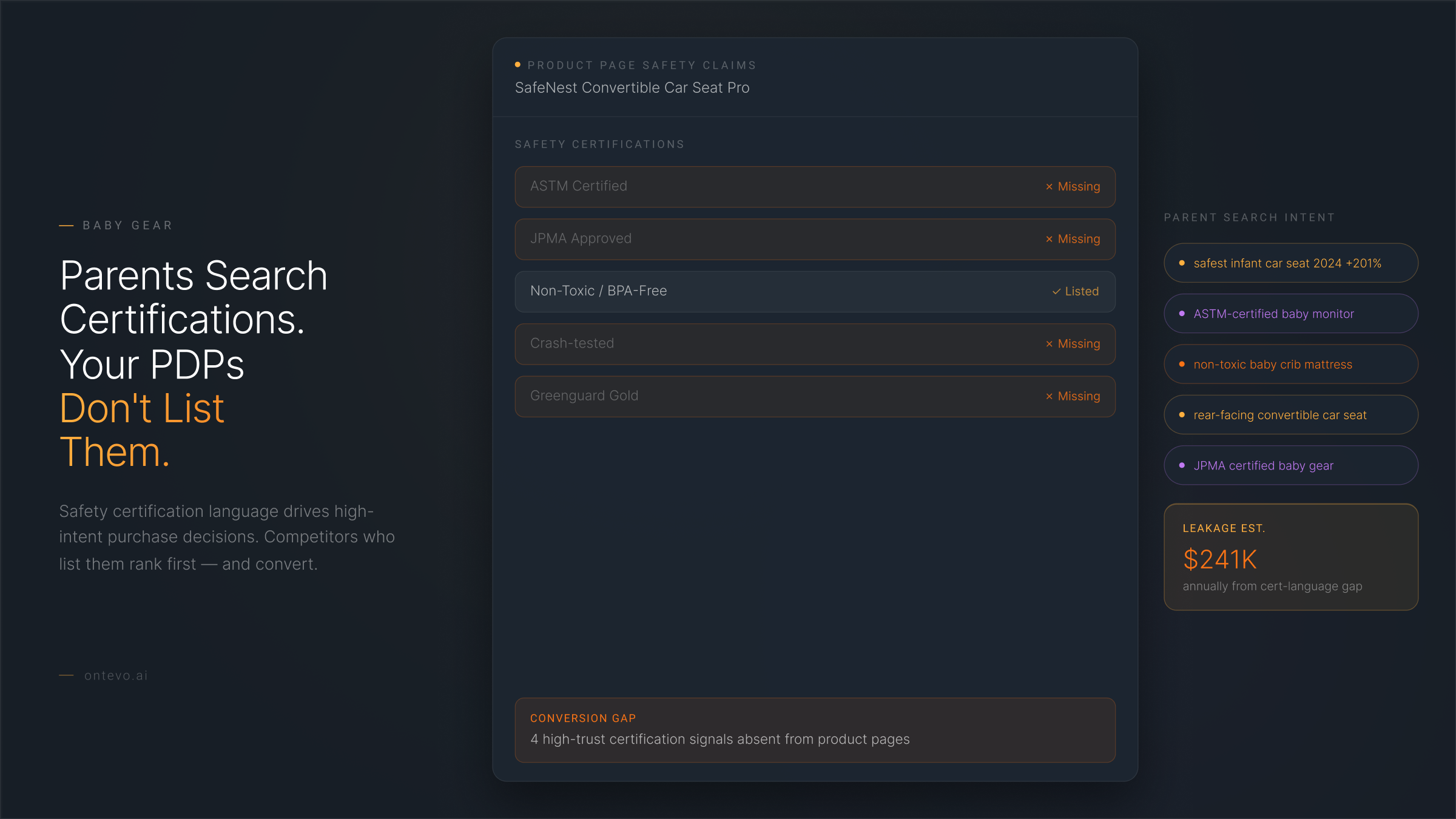
- In baby gear, the agent surfacing "one-hand fold" as the #1 wishlist item is doing the same work as the dental agent surfacing "fear" as the #1 consult-ghosting driver
- In remodeling, the agent that turns "dust" complaints into a productized process guarantee is doing the same work as the skincare agent that turns packaging complaints into a spec fix
The intelligence pattern is universal. The semantic bridge is vertical-specific. That's why generic AI tools produce generic results, and why vertical-specific agents produce revenue.
Where this is heading: The roster of 13+ Evo Agents is version one. As agents get better at chaining tasks (analyze → draft → deploy → measure → iterate), the gap between "having intelligence" and "acting on intelligence" closes to near-zero. The businesses that adopt this model first save money and, more importantly, compound speed advantages that become structural moats. When your competitor takes 3 weeks to update their menu after a trend shift and you do it in 3 hours, that gap compounds every quarter.
Every Business Has a Smoking Gun
Before you hire another agency, renew another dashboard subscription, or sign another device lease, find out what's actually broken.
Every business has a Smoking Gun, the single undeniable data point that reframes the problem:
- Med spas: Traptox has 340% more demand than generic Botox searches, and your menu doesn't mention it
- Remodelers: Dust and communication drive 70% of your negative reviews, not craftsmanship
- DTC brands: 42% of your 1-star reviews mention packaging, not formula
A free Rapid Scan finds yours. The 30-second Rapid Scan puts a Truth Card on screen with a confidence score, revenue impact estimate, and evidence trail. It speaks CFO, not marketing fluff.
Your dashboard was built to show you what happened last quarter. The market moved this morning.
Ontevo Research. Where this post carries figures, they come from Ontevo's own scan corpus or are modeled from scan patterns across the category. No figure is measured from a named customer.