The AI Business Coach Is Here, and It's Not What You Think
You Need a Team That Executes, Not Another Advisor
If you Googled "AI business coach" expecting a chatbot that gives advice, you're about to be disappointed, and then relieved.
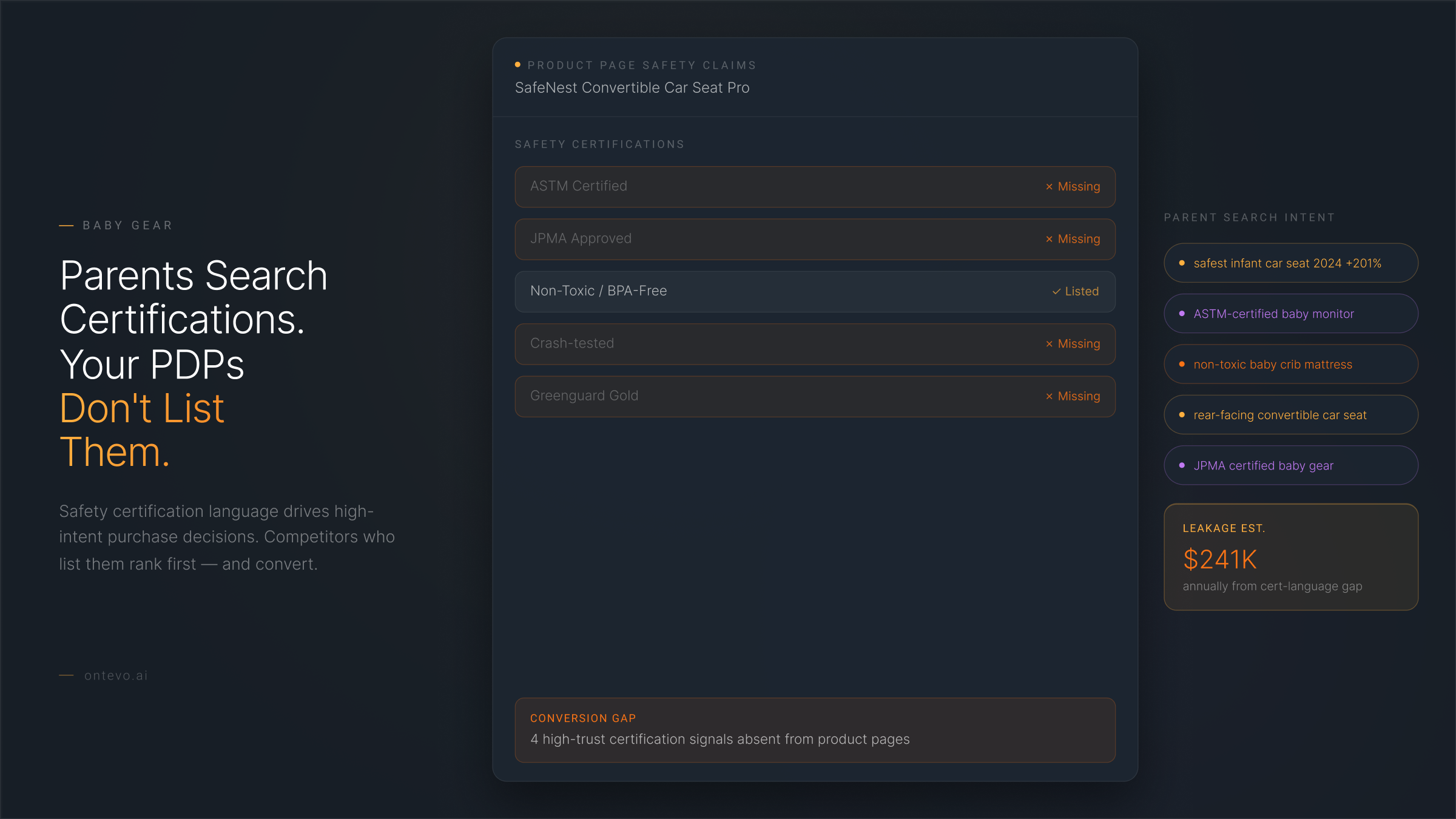
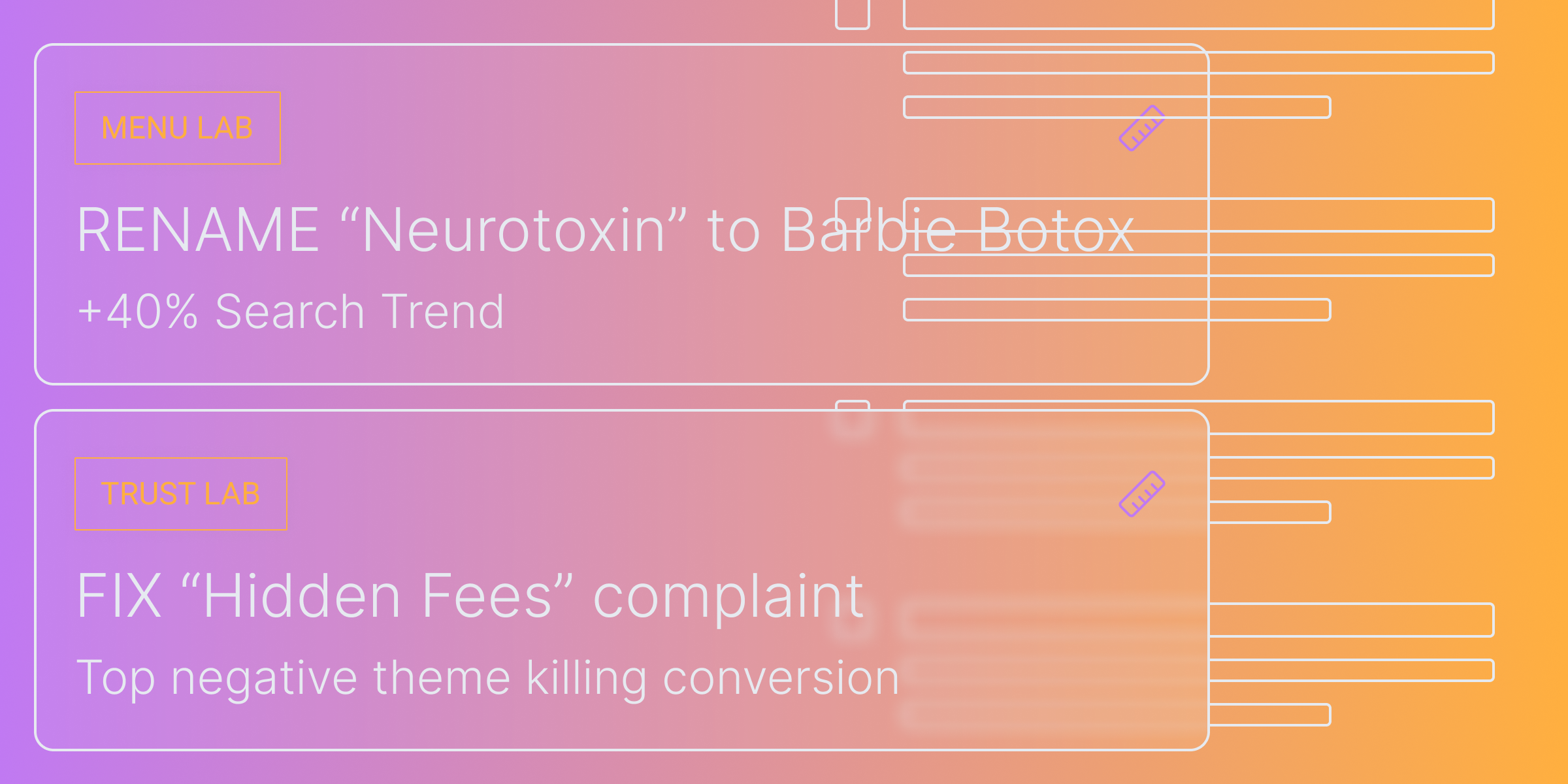
Disappointed because the chatbot version is already obsolete. You can ask ChatGPT to "act as a business strategist" right now, for free. It'll give you frameworks. It'll sound smart. It won't tell you that "traptox" has 340% more search demand than "Botox" in your zip code and your menu doesn't mention it.
Relieved because what's actually emerging in 2026 is far more useful than advice.
It's a team of autonomous AI agents that do the work a $300K/year strategy-plus-operations hire would do: find what's broken, put a dollar sign on it, and draft the fix, not in a quarterly review but every day, while you sleep.
A human business coach charges $3K–$10K/month, meets biweekly, and gives you frameworks to think about your business. An AI chatbot gives generic answers to generic questions. Neither one mines 500 competitor reviews to find that 70% of negative feedback in your market mentions dust and communication, not craftsmanship.
The real AI business coach is not a coach at all but Services as Software: AI agents that replace labor, not dashboards.
Why "AI Business Coach" Is the Wrong Frame
The search term reveals a real pain. Business owners are overwhelmed, under-informed, and spending on tools that don't connect to revenue.
Consider the stack. The average med spa pays $1,149/month across 3–4 siloed platforms (EHR, booking, marketing automation) and still can't answer a basic question: which treatment should I promote next month, and why?
Cookware brands juggle Amazon Seller Central, Jungle Scout, and Helium 10. Remodelers use ServiceTitan, Houzz, and a CRM that nobody updates. Skincare founders stare at Meta Ads Manager and Shopify Analytics in separate tabs, trying to connect ad spend to product returns with a spreadsheet.
The result is what we call the innovation blind spot: 50 dashboards showing you what happened last month, zero systems telling you what's about to cost you money next month.
Dashboards vs. Intelligence
- Dashboard: "Your revenue was $87K last month." (Lagging indicator. You already knew this.)
- Intelligence: "Traptox demand is up 210% YoY in your zip code. Your top 3 competitors list it. You don't. Estimated leak: $10,400/month." (Leading indicator. You didn't know this.)
Even among the 45% of med spas that pay for some form of intelligence tool (at an average of $450/month), the top complaint is the same: it doesn't connect marketing spend to patient lifetime value for specific treatments.
A coach gives you a framework to think about that problem. An agent system gives you a Truth Card: a financial validation artifact with a confidence score, a revenue impact number, and an evidence trail. One is a conversation. The other is a CFO-grade brief.
What an AI Agent Team Actually Looks Like
Not one monolithic AI but a network of specialized agents, each with a narrow job, each drafting outputs for human approval.
The architecture follows a simple logic:
- FIT (Strategic Intelligence): Is your product, service, or menu competitive? Agents mine wishlists, benchmark specs, and track trend velocity. They answer: "Is what you sell what the market wants?"
- FUNNEL (Revenue Intelligence): Can customers find you and buy? Agents read your Google Business Profile, your listings, your SEO, your booking flow. They answer: "Can they find you?"
- FIX (Action Layer): Agents draft the actual deliverables: review responses, listing rewrites, menu concepts, proposal language. They answer: "Who does the work?"
The critical distinction: human-in-the-loop, always. Every agent drafts. You approve. You edit. You reject. Rather than a black box making decisions for your business, it's a team that does the research and prep work so your decisions are informed by data instead of gut feel.
Think of it as hiring 13+ Evo Agents that work 24/7, never call in sick, and hand you a brief every morning with exactly what needs your attention.
Agent Example #1: The MedSpa With a $10,400/Month Menu Gap
A med spa in Scottsdale lists "Botox Cosmetic" on their Google Business Profile and website. Standard, professional, and invisible to 40% of the injectable search demand in their zip code.
Meanwhile, "traptox near me" search volume is up 210%+ YoY. Their top 3 competitors already list "traptox," "lip flip," and "baby botox" as named services. One competitor bundles Morpheus8 + PRF into a "Regenerative Glow" protocol at $2,800/session.
What the Agents Find
- Service gap analysis: 60% of the local cohort lists GLP-1 weight management. This practice does not.
- Feature benchmark: Competitor bundles Morpheus8 + PRF into a named protocol. This practice lists them as separate line items.
- Profile gap: 8 GBP photos vs. a cohort median of 45. Zero GBP posts in 90 days. 18-hour median review response time.
The Truth Card: "$10,400/mo: invisible to 40% of injectable search demand in your zip code."
What the Agents Draft
A restructured treatment menu with demand-aligned naming. GBP service listing updates using the terms patients actually search. A 90-day content calendar targeting the specific gaps.
You approve every change. Your clinical judgment decides which treatments to offer. The agents just showed you what the market is asking for, and what it's costing you to ignore it.
We broke down the full math in Menu Stagnation Is Costing MedSpas $10K+/mo.
The DIY Version
Even without any tool: Google your top treatment + your city. Compare your GBP listing to the top 3 results. If yours says "Botox" and theirs says "Traptox / Barbie Botox / Trap Tox Injections," you can see the gap with your own eyes.
Agent Example #2: The DTC Brand Bleeding $14,200/Month on the Wrong Problem
A skincare brand spends $40K/month on Meta ads. CAC keeps climbing. The founder blames the algorithm, tests new creatives, hires a new agency.
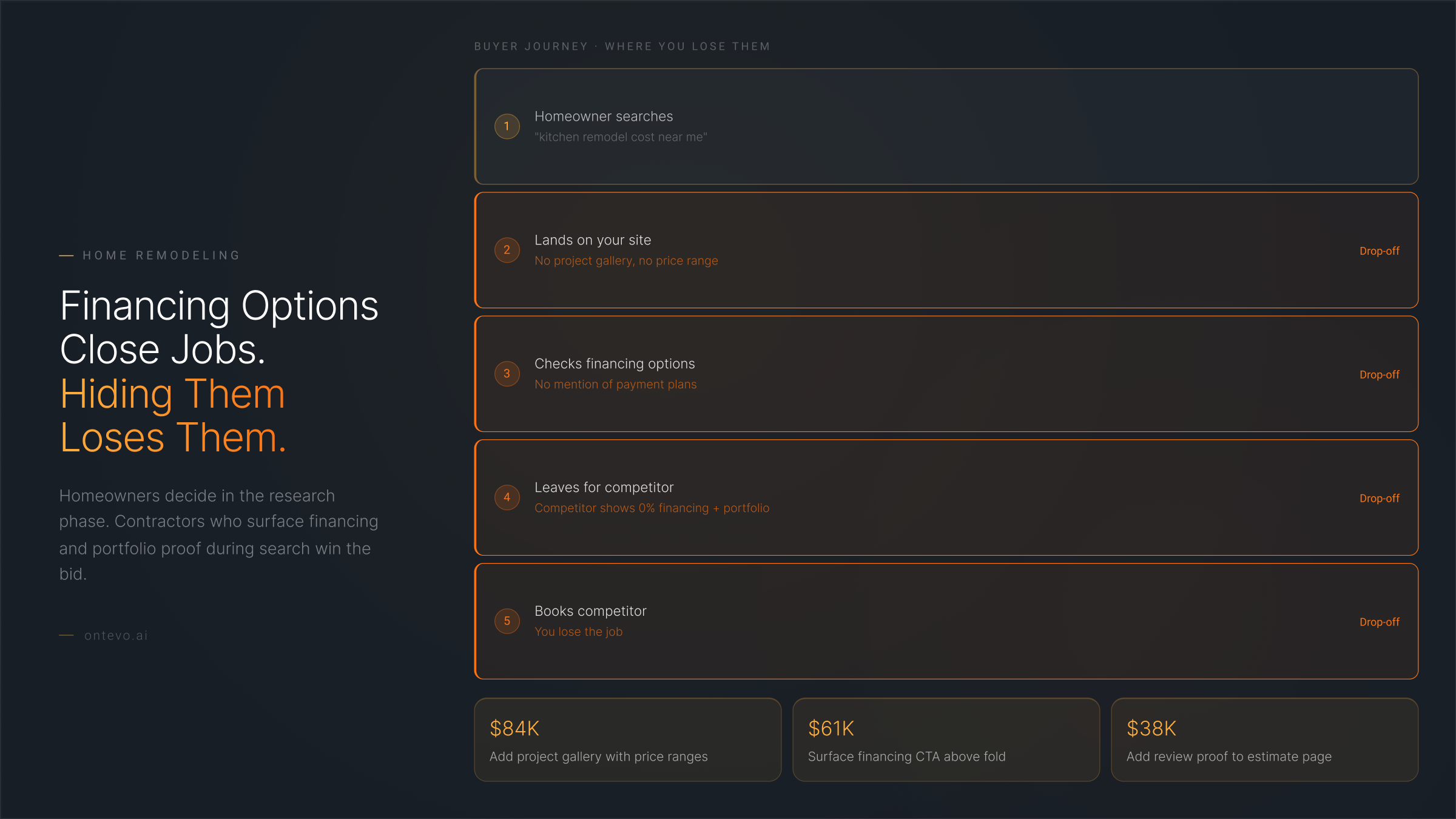
None of that will work, because 42% of their 1-star reviews mention packaging failures (pumps that clog, jars that oxidize actives), not formula complaints.
The product experience is broken, not the algorithm.
What the Agents Find
- Review intelligence: "Barrier repair" appears in 40% of competitor wishlists. This brand has no SKU addressing it.
- Competitor benchmark: 4 of 5 top-selling serums in the category use airless pump packaging, which preserves active ingredients 40% longer.
- Return analysis: Packaging-driven returns inflate CAC by creating a negative review loop that suppresses conversion rates on every ad.
The Truth Card: "$14,200/mo: CAC inflated by packaging-driven returns and negative reviews, not ad targeting."
What the Agents Draft
A product concept brief for a barrier repair serum in airless pump packaging. A revised PDP with spec claims addressing the top 5 wishlist items. A review response strategy that acknowledges packaging issues and announces the fix.
You approve the concept. You decide whether to reformulate. The agents surfaced the data that reframes the entire problem.
The full breakdown is in The CAC Tax: Why Your Ad Spend Isn't the Problem.
The DIY Version
Export your 1-star and 2-star reviews into a spreadsheet. Categorize each complaint: product/formula, packaging/delivery, customer service, or expectations mismatch. If packaging dominates, the problem is your product experience, not your ad spend.
Agent Example #3: The Remodeler Losing $22,800/Month to Process Anxiety
A design-build firm closes 60% of leads under $30K but only 35% over $50K. They assume it's price sensitivity.
The reviews say otherwise. "Dust" and "communication" appear in 70% of negative reviews across their local cohort. The complaints are process anxiety, not craftsmanship or pricing.
What the Agents Find
- Review analysis: Competitor 5-star reviews praise the process (daily photo updates, dust-free containment, dedicated project managers) more than the finished product.
- Proposal gap: This firm's proposals are line-item price sheets with zero experience language. Competitors include process guarantees.
- Conversion pattern: High-ticket projects require higher trust. Without process guarantees, proposals over $50K ghost at 40%+.
The Truth Card: "$22,800/mo: proposals lack process guarantees that reduce perceived risk on high-ticket projects."
What the Agents Draft
Proposal template language with embedded process guarantees ("dust-free containment protocol," "daily photo updates"). A "What to Expect" one-pager for the consult packet. GBP post templates showcasing the containment protocol and daily update process.
You approve the language. You decide which guarantees you can actually deliver. The agents turned your competitors' 5-star reviews into your proposal strategy.
The DIY Version
Read your competitors' 5-star reviews. Count how many mention the process (communication, cleanliness, updates) vs. the finished product. If process dominates praise, that's what wins deals, and your proposal needs to sell it.
The Math: Services as Software vs. Traditional Options
Let's be honest about the cost comparison:
- Human business coach: $3K–$10K/month. Gives frameworks and accountability. Doesn't write your GBP listings or analyze 500 competitor reviews.
- Marketing agency: $5K–$15K/month. Executes tactics but rarely questions strategy. Doesn't tell you your menu is wrong; they just run ads for whatever you're selling.
- In-house strategy hire: $150K–$300K/year fully loaded. One person who can't monitor dozens of data signals across five pillars simultaneously.
- AI agent team: Replaces the labor of the agency, the coach, and the analyst: not perfectly, but for the 80% of recurring intelligence and execution work that doesn't require senior human judgment.
The key nuance: AI agents replace the 20–30 hours/week of research, drafting, and monitoring that the owner or a marketing coordinator currently does poorly (because they're also doing 15 other jobs), not the owner's judgment.
Remember the med spa stack: $1,149/month across siloed tools that don't talk to each other. The better question than "should I add another tool?" is "should I replace three tools with one system that connects the dots?"
For a deeper dive on this shift, read Services as Software: Why the Next Wave of AI Replaces Labor, Not Dashboards.
What AI Agents Can't Do (And Why That Matters)
Intellectual honesty time.
AI agents can't replace clinical judgment. A med spa owner still decides which treatments to offer based on training, licensing, and patient safety. They can't override taste and brand vision: a DTC founder still defines the brand. They can't handle novel crises: a remodeler still manages the client whose kitchen flooded mid-project.
AI agents can't feel what your customer feels. They can surface that 62% of dental implant consults ghost and that "fear" appears 3x more than "price" in patient feedback. But the empathy in the consult room? That's human. Always will be.
Every agent output is a draft. You approve, edit, or reject. This is automation doing the prep work so your decisions are informed by data instead of gut feel, not automation replacing you.
Any AI tool that claims to "run your business for you" is selling a fantasy. The real value is in the intelligence layer (knowing what's broken, what it's costing, and what to do about it) delivered fast enough to act on.
How to Evaluate Any "AI Business Coach" Tool
Whether you use Ontevo or something else, here's the checklist that separates real intelligence from dressed-up dashboards:
- Does it connect to revenue? If the output is "insights" without dollar signs, it's a dashboard, not intelligence. Look for revenue impact estimates tied to specific gaps, not vanity metrics.
- Does it benchmark you against your actual competitors? Generic industry benchmarks are useless. You need local cohort data: your zip code, your category, your price tier. "The average med spa" means nothing. "The 5 med spas within 3 miles of you" means everything.
- Does it draft or just diagnose? Diagnosis without execution creates more work. Look for systems that produce draft deliverables (review responses, listing copy, menu concepts, proposal language), not just reports you have to act on yourself.
- Is there a human-in-the-loop? Full automation without approval workflows is a liability, especially in regulated verticals like medical aesthetics and dental. Every output should be a draft you approve.
- Does it replace tools or add to the stack? If adopting the tool means paying for yet another platform on top of your existing $1,149/month stack, the ROI math needs to be very clear. The best systems consolidate; they don't pile on.
Print this list. Use it on every demo. The tool that checks all five boxes is the one worth paying for.
The Smoking Gun Pattern
Step back and look at the three examples together:
- MedSpa: "Traptox has 340% more demand than Botox, but your menu doesn't mention it."
- DTC Skincare: "42% of your 1-star reviews mention packaging, not formula."
- Remodeling: "Dust and communication appear in 70% of negative reviews, not craftsmanship."
In every case, the owner thought the problem was distribution: more ads, more leads, more traffic. In every case, the data showed the problem was the asset itself: the menu, the product, the proposal.
That's the fundamental reframe. Rather than a coach telling you to "work on your marketing," you need a system that tells you exactly which gap is costing you the most money, right now, with evidence.
A single undeniable data point, a Smoking Gun, is what changes the conversation from "we should probably update our website" to "we're losing $10,400 a month because our menu doesn't match what patients are searching for."
What This Means for 2026 and Beyond
The "AI business coach" search term will evolve as buyers get more sophisticated. Today it means "I want AI to help me think about my business." By 2027, it will mean "I want AI to do the work my agency and coordinator do, faster and cheaper."
The businesses that win in 2026–2028 will be the ones that use AI to fix the asset (the product, the service, the experience) before throwing more money at distribution, not the ones with the best AI tools.
The shift from "tools that show you data" to "agents that do the work" is the defining trend. Dashboards are table stakes. Execution is the moat.
Before You Hire a Coach, Find Out What's Actually Broken
Before you sign another agency retainer, book another coaching call, or add another dashboard to the stack, find out what's actually broken.
A Rapid Scan puts a Truth Card on screen: the specific gap, the specific revenue impact, the specific fix. It takes about a minute of your time. The rest is on the agents.
You'll know exactly what's costing you money, and exactly what to do about it. No frameworks, no advice: just the data, the dollar sign, and the draft.
Ontevo Research. Where this post carries figures, they come from Ontevo's own scan corpus or are modeled from scan patterns across the category. No figure is measured from a named customer.